US News & Politics · Explainer
The Army will detonate 9,500 pounds of decaying explosives in Iowa on Wednesday. Here's why it says there is no safer option
A federal appeals court lifted its hold Monday, clearing the Army to detonate 68 barrels of recrystallized lead azide at the Iowa Army Ammunition Plant near Middletown on Wednesday morning, despite residents' fears of a toxic lead plume.
Updated Nov 25, 2026, 2:23 PM CT: the Army detonated all 68 barrels at 9 AM CT and calls it a success; EPA air monitors detected no airborne lead in the first hours, and damage in Middletown appears minimal.

Watch: Iowa's News Now on the Army's postponed lead azide detonation, from Iowa's News Now.
Update, November 25: the detonation is done, and the first air readings are zero
The wait ended at 9 a.m. CT. According to USA TODAY's live coverage, the Army detonated the 68 barrels in two rapid-fire shots at the Iowa Army Ammunition Plant, and Maj. Gen. Eric Shirley said afterward that all of the lead azide barrels were "definitively removed." President Trump, who had ordered a pause days earlier, called the detonation a success that "exceeded all expectations." The Des Moines Register, reporting from Middletown more than 90 minutes after the blast, found damage minimal, with no known reports of broken residential windows or structural damage. KCRG reported that FEMA sent an 8 a.m. alert telling residents evacuation was no longer safe or advised, and that EPA real-time air monitors detected no airborne lead one hour after the detonation; at the Army's news conference, officials put the EPA reading at 0.0 micrograms two hours after the blast. The USDA said in a statement that the food supply "remains safe," with more than 140 USDA offices within a 100-mile radius assisting farmers. What is not known yet: soil, water and surface test results, which will decide whether the Army's mitigation worked as completely on the ground as the first air readings suggest.
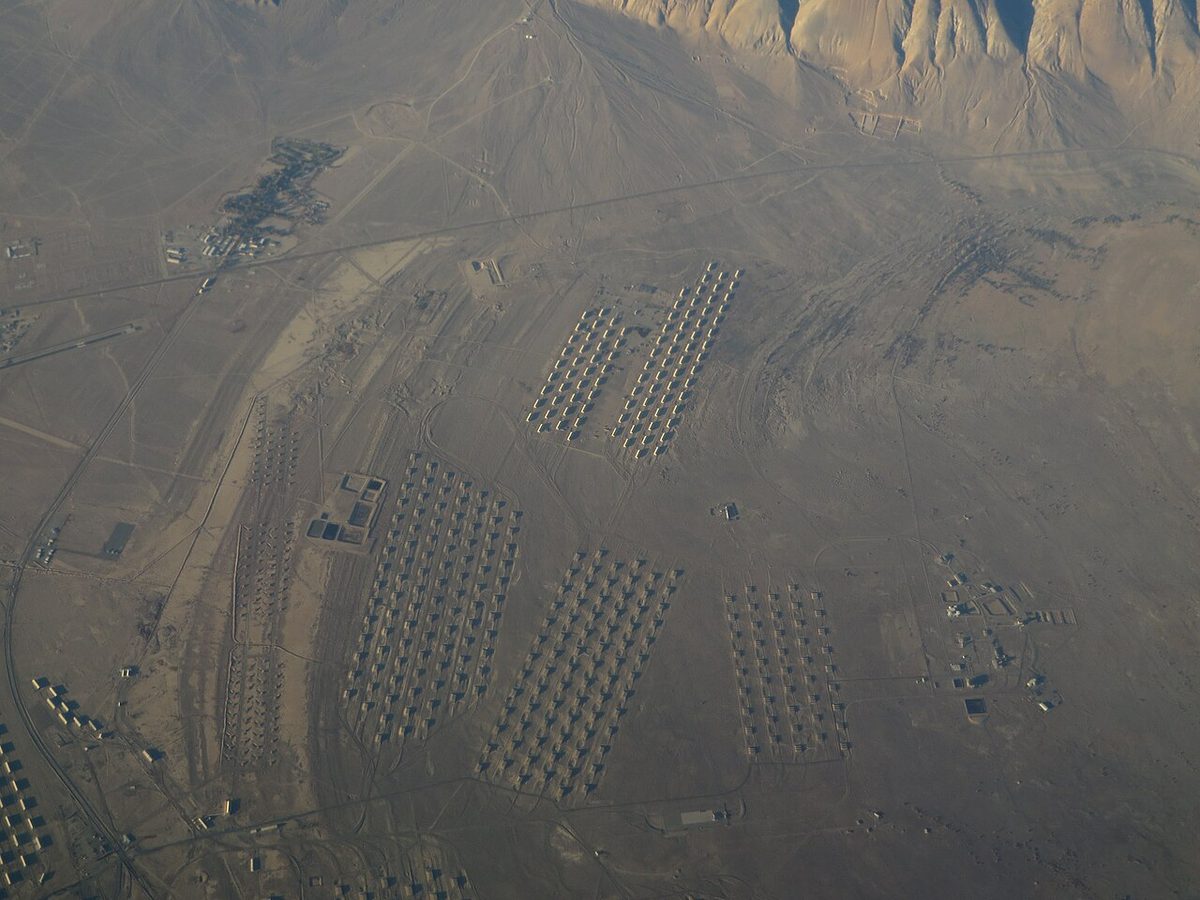
Nearly five tons of one of the most sensitive explosives in the Army's stockpile has been quietly going bad inside earth-covered bunkers in southeast Iowa. On Wednesday morning, after a week of court fights, presidential second thoughts and angry town meetings, the Army plans to blow it up where it sits.
The operation, in numbers
What lead azide is, and why it cannot simply be hauled away
Lead azide is a primary explosive — the small, hair-trigger charge used to set off bigger munitions. According to Reuters' explainer, the stockpile's long storage let the chemical recrystallize, and the Environmental Protection Agency says that made it so unstable that moving it — or even opening the barrels — risks an uncontrolled explosion. The Army had earlier hired a Georgia firm, MuniRem Environmental, to neutralize the material chemically, then canceled that contract over safety concerns and chose detonation instead, CNN reported. The EPA's emergency permit covers a detonation window running from November 13 to February 11, 2027, and officials warn that this week's forecast drop below 30°F could further destabilize the material if it is left in place.
How Wednesday became the date
The blast was first set for last Friday, then pushed to Monday, then Tuesday, then Wednesday "to allow for optimal weather conditions and all mitigation measures to be emplaced," the Army said. Environmental groups sued, and the Eighth Circuit temporarily froze the EPA permit on Thursday. On Monday the appeals court lifted that hold, finding the challengers unlikely to succeed, the Wall Street Journal reported. President Trump had earlier ordered the military to pause until the court ruled and Iowa's governor-elect agreed; on Monday evening Acting Army Secretary Adam Telle wrote on X that "every expert agency agrees, and both Iowa's current and incoming Governors say the call belongs to the experts," and confirmed the Wednesday-morning detonation. The FAA has restricted flights around Middletown from Monday through Wednesday.
Why neighbors are frightened anyway
Detonating lead in the open air means a plume of lead dust, and where it lands depends on the wind. One expert cited by Reuters estimated a Wednesday plume could travel 40 to 50 miles southwest of the plant. Iowa's health department recommends residents in affected areas keep windows and doors shut and turn off systems that pull in outside air for 24–48 hours afterward, clean surfaces, and ask healthcare providers about blood testing for lead. Environmental groups argue the risk to homes, crops and livestock has not been justified; the Army's answer is that the alternative — an unstable stockpile that could go off on its own in the cold — is worse. Both things can be true at once, which is exactly why this fight reached a federal appeals court.

Watch: KCRG-TV9's live coverage of the lead azide detonation, from KCRG-TV9: Your Trusted Local News Source.
What happens next
The detonation went ahead as planned (see the update above). The questions now are about monitoring: what soil, water and surface testing shows, where the lead dust settled, and what testing the Army and the state offer the roughly 400 residents of Middletown and the farms around the plant.
Sources: Reuters, What to know about US Army plans to blow up a stockpile of lead azide in Iowa, Nov 23, 2026 · CNN, US Army to detonate explosives in Iowa on Wednesday, Nov 23, 2026 · The Wall Street Journal, Court Clears Way for Detonation of Toxic Lead Explosives in Iowa · USA TODAY, live updates, Nov 25, 2026 · Des Moines Register, live updates, Nov 25, 2026 · KCRG via Gray News, Nov 25, 2026
Get TrendBrief in your inbox
The day's top stories, explained — free, every morning.
Read us through Google? Add TrendBrief as a preferred source and Google will boost TrendBrief in your Top Stories when you search.