US News · Explainer
Dolores Huerta dies at 96: the farmworker leader behind 'Sí se puede' — and the 2026 reckoning that reshaped her story
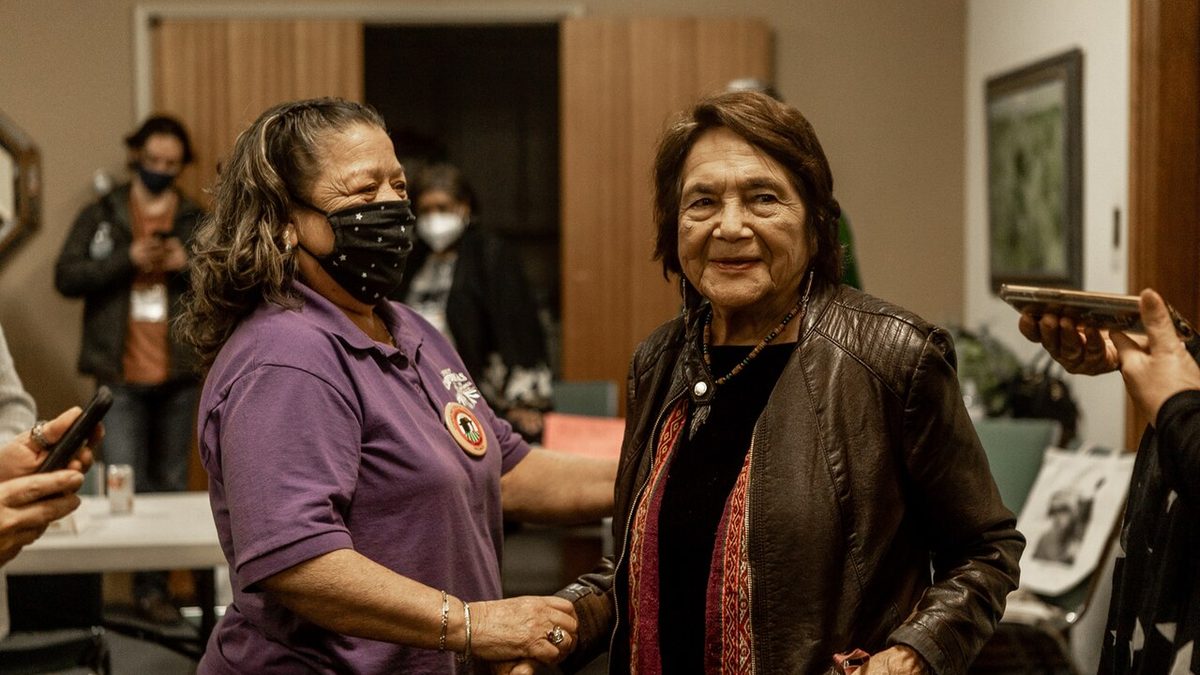
Dolores Huerta, who co-founded the union that became the United Farm Workers, coined 'Sí se puede' and won farmworkers collective-bargaining rights in California, died Wednesday at her Bakersfield home at 96.

Watch: AP's obituary report on labor leader Dolores Huerta, from AP Archive.
Dolores Huerta, who spent seven decades fighting for the farmworkers of California and co-founded the movement that became the United Farm Workers, died on Wednesday, October 28, at her home in Bakersfield. She was 96. According to USA Today's obituary, her family announced her death on Wednesday and a family spokesman said the cause was cancer. She co-founded the organization that became the United Farm Workers, helped lead the grape boycotts that changed how America saw the people who harvest its food, and coined the two-word slogan — "Sí se puede," "Yes, we can" — that outlived the fields where it was born. Her death closes a life that ran from a Stockton classroom to the Presidential Medal of Freedom, and it lands in the same year she forced a painful rewrite of her own movement's history.
From a Stockton classroom to the fields
Huerta was born Dolores Clara Fernández on April 10, 1930, in Dawson, New Mexico, and raised in Stockton, California, per USA Today. She earned a teaching certificate and briefly taught elementary school — and what she saw there redirected her life: children arriving at school hungry and without adequate clothing. She turned to community organizing, worked with the Community Service Organization in the 1950s, and in 1962 co-founded the National Farm Workers Association with César Chávez, the predecessor of the United Farm Workers. "People thought we were crazy," she later recalled. "They asked: 'How are you going to organize farm workers? They are poor, powerless immigrants. They don't have any money and they can't vote.'"
Delano, the boycott and the 1975 law
The movement's defining fight began in Delano in 1965, when Filipino farmworkers launched a strike against table-grape growers and Huerta's organization joined them; Huerta worked alongside Filipino leader Larry Itliong, ran boycott campaigns and negotiated with growers, per USA Today. The nationwide boycott of California table grapes turned a Central Valley labor dispute into a consumer movement — millions of Americans stopped buying grapes, and major growers eventually signed union contracts. The organization became the United Farm Workers in 1972, and in 1975 California enacted the Agricultural Labor Relations Act, the first U.S. law granting farmworkers collective-bargaining rights. Huerta served as a UFW officer for 37 years, stepping down in 1999, was arrested more than 25 times for nonviolent civil disobedience, and in 1988 was beaten by a San Francisco police officer during a protest — broken ribs and a ruptured spleen, followed by an $825,000 settlement she put to work for farmworkers, per USA Today.
'Sí se puede' — and the honors
Huerta coined "Sí se puede" as a UFW rallying cry; Barack Obama's 2008 campaign adopted it as "Yes, we can," and Obama acknowledged the borrowing when he awarded her the Presidential Medal of Freedom in 2012. She was the first Latina inducted into the National Women's Hall of Fame (1993), received the Eleanor Roosevelt Human Rights Award in 1998, and April 10 is Dolores Huerta Day in California. In 2002 she founded the Bakersfield-based Dolores Huerta Foundation, which continued her organizing work; it held a sold-out celebration of her 96th birthday in Los Angeles in June 2026, per USA Today. In a statement after her death, former President Obama called her "a hero of mine" and wrote of the slogan she coined: "I too often get credit for. But as usual, Dolores got there first," according to The Contrarian's roundup of tributes. United Farm Workers President Teresa Romero called her a "tireless advocate for farm workers, women, immigrants, the LGBTQ+ community and all marginalized people," per USA Today.
The 2026 reckoning
Huerta's final year changed how her story — and Chávez's — will be told. In March 2026, at 95, she publicly accused Chávez, who died in 1993, of sexually abusing her during their years in the movement. According to USA Today's account of her statement, she said Chávez raped her in a vehicle in a secluded California grape field in 1966, and that she stayed silent for some 60 years out of loyalty to the movement, distrust of law enforcement and fear she would not be believed. "I never talked about it to anybody, and the reason I didn't is because I just didn't want to hurt the movement," she said. Her statement coincided with a New York Times investigation that also included allegations from two women who said Chávez abused them as girls in the 1970s. The disclosures do not erase what the movement won for farmworkers; they complicate the history of the two people who built it — and Huerta, characteristically, was the one who insisted the record be complete. More of the week's major U.S. stories are in our explainer on the FBI's Beverly Hills search and our FAMU homecoming shooting explainer.
Read us through Google? Add TrendBrief as a preferred source and Google will boost TrendBrief in your Top Stories when you search.
Sources: USA Today (death at her Bakersfield home on October 28, the family's cancer disclosure via a spokesman, the Stockton teaching years, the 1962 founding, the Delano strike and boycott, the 1975 Agricultural Labor Relations Act, the 1988 beating and settlement, the 2012 Medal of Freedom, the foundation's June 2026 birthday celebration, the March 2026 accusations against Chávez in her own words, and the Romero tribute); The Contrarian (former President Obama's tribute statement); Smithsonian Magazine and AZ Central (the 1993 first-Latina National Women's Hall of Fame induction, the 1998 Eleanor Roosevelt Award, the 25-plus arrests and the New York Times investigation context).