Tech · Explainer
Your TV will interrupt itself at 2:20 p.m. today. It is a test, and your phone is not invited
A viral rumor turned a routine, pre-announced alert test into a scheduled blackout. The test is real, the blackout is not, and the detail everyone will get wrong is the silent phone.
Updated Nov 17, 2026, 2:16 PM CT: the nationwide test ran at 2:20 PM ET and went smoothly, officials say.

Watch: FEMA's own nationwide test message from the FEMA Administrator, the agency running today's test, from FEMA.
Update — Tuesday, November 17, 2026: the test ran at 2:20 p.m. ET, lasted less than a minute and went smoothly
The test this article previewed is now over, and it went as announced. According to CNN, Tuesday's test took place around 2:20 p.m. Eastern time and lasted less than a minute, carried across radio, broadcast, cable and satellite TV providers, though not on phones. A Department of Homeland Security official told CNN that the test went smoothly, and by 2:21 p.m. Eastern, every channel was back to regular programming. The message viewers and listeners heard was the fixed one quoted in the lede below: "This is a nationwide test of the Emergency Alert System, issued by the Federal Emergency Management Agency. This is only a test. No action is required by the public."
CNN also reported that the test was not related to any of the recent tech outages and disruptions, a point FEMA had already made in its Monday post: "No blackouts, no secret emergencies." Because the test ran on schedule, the December 3 backup date described below is not needed. FEMA officials said they worked closely with the Federal Communications Commission to conduct the drill. The last nationwide test, in October 2023, also sent a Wireless Emergency Alert to cell phones; this one was limited to the Emergency Alert System for radio and TV.
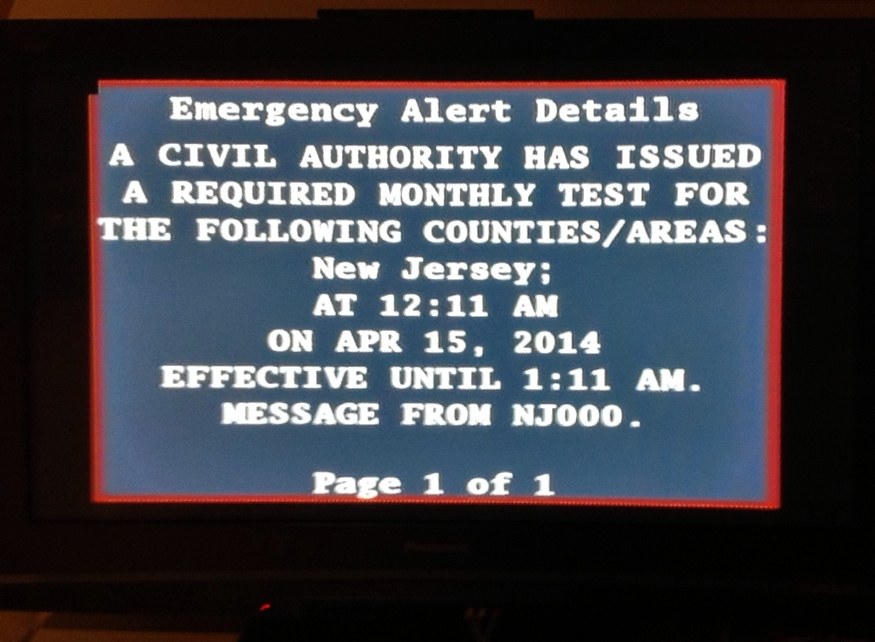
If your television or radio cuts into programming this afternoon with tones and a robotic calm, nothing has happened. According to the FCC's public notice DA 26-989, the Federal Emergency Management Agency, in coordination with the FCC, conducts a nationwide test of the Emergency Alert System at 2:20 p.m. Eastern today, sent through the Integrated Public Alert and Warning System (IPAWS) in English and Spanish. The message itself is fixed: 'This is a nationwide test of the Emergency Alert System, issued by the Federal Emergency Management Agency, covering the United States from 2:20 to 2:50 hours ET. This is only a test. No action is required by the public.' The 2:20 to 2:50 window is the alert's technical validity period, not its length: on air, it lasts about a minute.
Key facts
Where the blackout rumor came from, and why it is wrong
For weeks, social posts have treated November 17 as a scheduled day of darkness, variously a blackout, an internet shutdown or a secret emergency. The date is real; the event attached to it is this test, which has been on the FCC's public calendar since its September 16 notice. FEMA addressed the rumor head-on on Monday, in the words carried by NorthJersey.com's rumor check: 'No blackouts, no secret emergencies.' No grid operator, bank or agency has announced any shutdown for today, and as of this morning no widespread US power, internet or banking outage was being reported. The test does not switch anything off. It interrupts broadcasts, briefly, and then programming resumes.
Why your phone staying silent is the system working
The confusion is understandable because the last national test, in October 2023, tested two systems at once: the EAS on broadcasts and Wireless Emergency Alerts on phones, which is why nearly every phone in America buzzed that afternoon. This year's test is EAS only. FEMA's test page and the FCC notice describe broadcast distribution and do not include WEA at all, so a quiet phone at 2:20 p.m. is the expected result, not a failure. The two systems also do different jobs in a real emergency: WEA reaches phones in a targeted area with a short message, while EAS reaches everyone watching or listening with the detailed version. Testing them on separate cycles tells engineers which half broke, if one does.
What the test is actually measuring
A nationwide EAS test is a chain audit. FEMA originates one message into IPAWS; thousands of stations and providers must receive it, relay it correctly with matching audio and on-screen text (the FCC has reminded stations the visual text must match the audio, for viewers who are deaf or hard of hearing), and then file reports on what they received and when. Those ETRS filings are how the agencies find the dead links, the stations whose equipment silently failed, before a real national emergency finds them first. So the minute of tones this afternoon is the visible tip of a much larger reporting exercise that runs through Thursday's filing deadline. If you hear it, the chain reached you. That is the entire point.
Sources: FCC Public Notice DA 26-989 (the test time, the IPAWS distribution, the exact message text, the December 3 backup date and the ETRS filing deadlines); NorthJersey.com / USA Today Network (FEMA's 'No blackouts, no secret emergencies' response and the one-minute length); GridPrepped's read of FEMA's test page and FAQ (the TV-and-radio-only scope and the contrast with the 2023 phone test); CNN (the test ran around 2:20 p.m. ET on Tuesday, lasted less than a minute, a Department of Homeland Security official said it went smoothly, programming was back by 2:21 p.m. ET, and the test was not related to the recent outages).
Read us through Google? Add TrendBrief as a preferred source and Google will boost TrendBrief in your Top Stories when you search.