Money · Explainer
The Fed is expected to hold rates at 3.75%-4.00% today — why a pause now, and why more hikes may follow
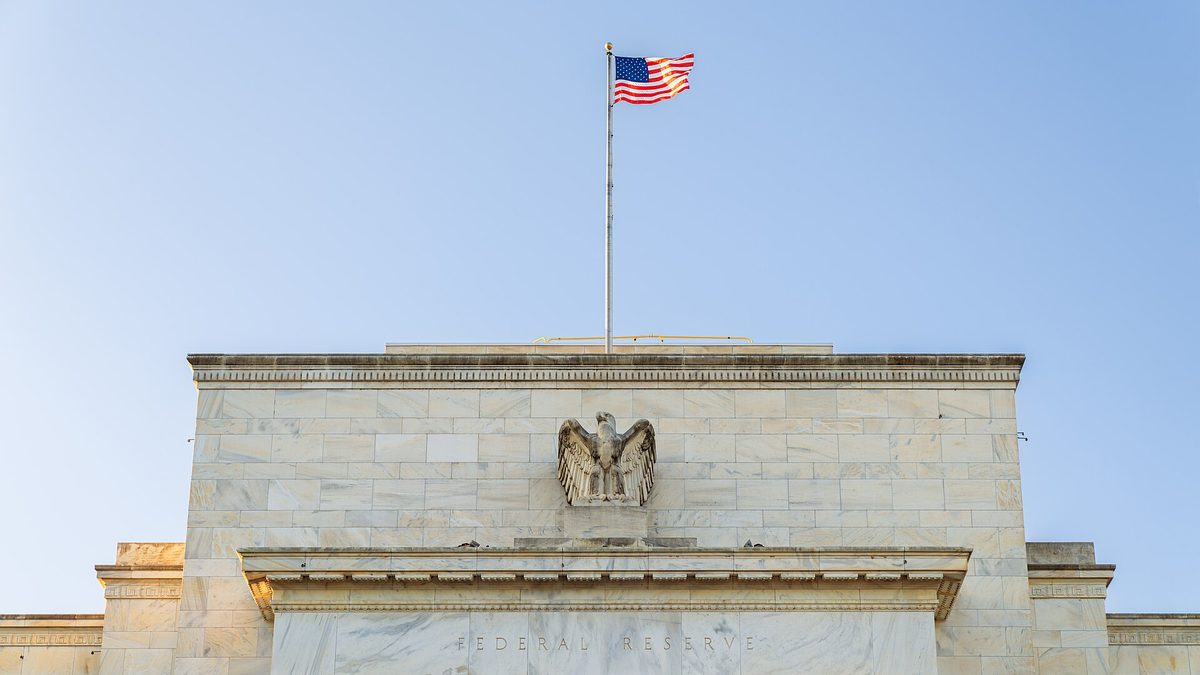
The Federal Reserve announces its rate decision at 2 p.m. EDT on Wednesday, and futures markets put roughly 90% odds on a hold at 3.75%-4.00%, a month after the first hike in three years.
Updated Nov 18, 2026, 2:12 PM CT: The Fed's October minutes show almost all officials backing further hikes, with a couple floating a half-point move.

Watch: Fed Chair Warsh's October 28 press conference remarks after the Fed held rates steady, from CNBC Television.
Key facts
Update — Wednesday, November 18, 2026: the October minutes show almost all officials backing further hikes, a couple floating a half-point move
The inside account of the October hold is hawkish. According to Reuters' report on the minutes of the October 27-28 meeting, released Wednesday, “almost all” policymakers agreed that further rate hikes would be needed if the economy evolved as they expected, while a few said inflation could prove more persistent and require “a shift to a more restrictive policy stance” than currently expected. “A couple” went further and argued the Fed might have to resort to a half-percentage-point increase “if incoming inflation data were unfavorable,” a benchmark Reuters notes was met in recent releases that showed prices rising faster than anticipated.
Among those who supported keeping the rate steady at 3.75%-4.00% in October, “a few” called the decision a close call, Reuters reported; the only dissents, from Governor Lisa Cook and Cleveland Fed President Beth Hammack, were in favor of a quarter-point hike at that meeting. The minutes set the stage for a potentially intense debate at the December 8-9 session over a larger hike, an argument Fed Governor Christopher Waller laid out in comments to CNBC on Wednesday, and they record the committee's first detailed discussion of artificial intelligence, weighing the risks of over-investment in the technology against its possible productivity benefits, per Reuters.
Update — Thursday, October 29, 2026: September inflation rose to 3.6%, and the economy grew 3.4% in the third quarter
The "more information" the Fed said it was waiting for arrived Thursday morning, and it pointed toward a hike rather than away from one. The Personal Consumption Expenditures price index climbed 0.5% in September after a 0.3% rise in August, lifting inflation to 3.6% over the year, from 3.4%, according to Reuters' report on the Bureau of Economic Analysis data. Core PCE — the measure that strips out food and energy — rose 0.3% on the month, with August revised up to 0.3% from the 0.2% first published, and 3.1% over the year, from 3.0%, per Reuters. In the same release, the economy grew at a 3.4% annualized rate in the third quarter, and consumer spending rose 0.5% in September — a gain the month's price jump almost entirely erased in inflation-adjusted terms, per Reuters.
Markets read the combination as December-hike fuel: financial markets were pricing in a roughly 84.6% chance of a rate increase in December, according to CME's FedWatch tool, as reported by Reuters. Chair Kevin Warsh had set up exactly this reading on Wednesday: "Energy and related prices have moved higher again in recent weeks, and our job is to ensure that relative price changes in some sectors do not broaden out across the economy, and that inflation expectations remain as they are anchored," he told reporters, per Reuters. The growth side leaned on the AI buildout: the Mortgage Bankers Association's chief economist, Mike Fratantoni, said growth was "driven by solid growth in consumer spending, particularly for services, and strong growth in business investment spending related to the AI buildout," with equipment investment up at a 20.8% annualized rate, while residential investment and net exports weighed — and the MBA is holding its forecast of two more rate hikes over the next six months. Strong growth plus inflation stuck well above the 2% target is the mix that keeps pressure on mortgage rates, even after this week's dip.
Update — Wednesday, October 28, 2026: the Fed held at 3.75%-4.00%, 10-2, with two officials voting to hike
The hold markets expected is what happened — but the split underneath it points up. The Federal Reserve kept its benchmark rate in the 3.75%-4.00% range in a 10-2 vote, according to Reuters. "Inflation remains elevated," the Federal Open Market Committee said, adding: "The accumulation of more information will help the Committee determine the policy stance appropriate to ensure a timely return of inflation to the Committee's 2% goal," and "The Committee will deliver price stability," according to Reuters' report of the statement. Governor Lisa Cook and Cleveland Fed President Beth Hammack dissented in favor of a quarter-point hike — Hammack also dissented for a hike in July, per Reuters. The statement upgraded the Fed's assessment of the economy to "strong," from "solid" in September, with investment still robust and job gains keeping pace with the workforce.
Chair Kevin Warsh declined to preview the December decision at his press conference, repeating that more information will help determine the appropriate stance, according to CoinDesk's live coverage. Traders moved the other way: the odds of a quarter-point hike at December's final meeting of the year rose to 86%, from 78% a day earlier, on CME's FedWatch tool, per CoinDesk. Warsh also announced a schedule change — starting in 2027, one of the FOMC's eight yearly meetings will be a strategy session with no rate vote, rising to two such meetings in 2028, per CoinDesk. Markets took the decision calmly at first: the S&P 500 was up 0.1% and the Nasdaq down 0.1% after the announcement, while the 10-year Treasury yield rose 5 basis points to 5.047% and the 2-year rose to 4.776%, according to Reuters — the 10-year move is the one that keeps pressure on mortgage rates. The next inputs are Thursday's September PCE inflation report and Q3 GDP estimate.
The Federal Reserve wraps up its two-day meeting on Wednesday, and the decision itself is the least uncertain part of the day. According to Reuters' preview of the meeting, the Fed is expected to hold its benchmark rate in the current 3.75%-4.00% range when it announces at 2 p.m. EDT, and CME Group's FedWatch tool puts about a 90% probability on that hold. What investors are actually pricing is the opposite question: not whether the Fed eases next, but how many more times it hikes. That is a very different meeting from the rate-cutting cycle markets expected a year ago — and it lands less than a week before midterm elections being fought over the cost of living.
Why hold, one month after a hike?
The Fed raised rates by a quarter of a percentage point last month — its first increase in three years, per Investopedia's market preview — and officials signaled ahead of this week's meeting that the central bank could afford to be patient, per Reuters. Holding at 3.75%-4.00% also moves the argument past the November 3 midterms, which will decide control of Congress. Chair Kevin Warsh, who took over in late May, promised in an August 28 speech to return inflation to the Fed's 2% target "at sufficient speed," and his post-decision press conference at 2:30 p.m. EDT is where he will have to reconcile that promise with a pause, per Reuters. Watch the dissents: Reuters reports that concern inflation is broadening could push some policymakers to vote for a hike even today.
The inflation problem is not fading
- Prices: initial estimates put September PCE inflation — the Fed's preferred measure — at 3% or higher on an annualized basis, with little progress in recent months, per Reuters. The official September PCE report lands Thursday, a day after the decision.
- Energy: the global oil benchmark has surged to around $114 a barrel, up about 20% since the start of September, and diesel prices are near record highs — a cost that feeds into agriculture, construction and transportation, per Reuters.
- Demand: economists and many Fed officials now blame not just the Iran-war energy shock and tariffs, but strong AI-industry demand and healthy consumer spending — the kind of demand-driven inflation the Fed believes its rates can actually reach, per Reuters.
That mix is why the debate has flipped. "Today, the question is not so much about whether the Fed will hike again, but about how many more hikes are to follow," Dario Perkins, TS Lombard's managing director for global macro, wrote ahead of the meeting, per Reuters. Derek Tang of Monetary Policy Analytics expects three more quarter-point increases in the coming meetings — in line with market pricing of quarterly hikes through June 2027, per Reuters.
What a hold means for your money
- Mortgages do not follow the Fed directly. Home-loan rates track longer-term Treasury yields — the 10-year yield ticked up to 5.01% this week, per Investopedia — which is why the average 30-year fixed mortgage was still 7.36% on Monday even with the Fed about to pause. A hold today, by itself, does not cut your mortgage rate; what moves it is what Warsh says about the hikes ahead.
- Savers and borrowers: credit-card and auto-loan rates keyed to the prime rate stay where they are on a hold, and high-yield savings rates hold too — the squeeze and the consolation both persist.
- Markets: stock futures were mixed Wednesday morning — Dow futures down 0.2%, S&P 500 up 0.2% and Nasdaq up 0.4% — with the Fed decision and earnings from Alphabet and Microsoft ahead, per Investopedia; gold traded near $4,060 an ounce and bitcoin around $81,300.
- The calendar: statement at 2 p.m. EDT, Warsh's press conference at 2:30 p.m. EDT, per Reuters; the September PCE inflation report follows Thursday, and Freddie Mac's weekly mortgage survey lands the same day — the inputs that will decide whether "wait-and-see" survives to December.
The through-line of 2026's rate story is that the cutting cycle never arrived: the AI investment boom that powered Anthropic's IPO filing this week is the same force Fed officials now cite as a source of inflation. Expect Wednesday's headlines to say "Fed holds" — and the fine print to point up.
Read us through Google? Add TrendBrief as a preferred source and Google will boost TrendBrief in your Top Stories when you search.
Timeline
| Date | What happened |
|---|---|
| September 2026 | The Fed raises rates, setting up October's question of whether to pause. |
| Wednesday, October 28 | The Fed holds at 3.75% to 4.00%, voting 10 to 2, with Chair Kevin Warsh warning that energy prices must not broaden into wider inflation. |
| Thursday, October 29 | September inflation prints at 3.6% and third-quarter growth at 3.4%, data that leans toward another hike. |
| December 2026 | The next meeting, where markets already price a strong chance of an increase. |
What happens next
December is the meeting that matters, and the two October dissenters are the tell: when officials vote to hike at a meeting the majority chose to hold, the next decision starts with momentum. The data calendar between now and then, inflation and jobs, will either license that hike or take it off the table. For what any of it does to borrowing costs, see how mortgage rates are set and the October jobs report, which landed after this decision and made the December call harder.
Frequently asked questions
Did the Fed cut rates in October?
No. The Fed held its target range at 3.75% to 4.00% on October 28. Two of the twelve voters wanted a hike instead, which is why markets read the pause as temporary.
What does a hold mean for mortgage rates?
Less than most people expect. Mortgage rates track the 10-year Treasury yield more than the Fed's rate, so a hold can still see mortgage rates rise if bond investors expect future hikes. Our guide to how mortgage rates are set explains the connection.
What is FedWatch?
It is a CME Group tool that converts prices in interest-rate futures into odds for the Fed's next moves. The roughly 84.6% December figure in this article is the market's bet, not the Fed's promise.
Why would the Fed hike one month after holding?
Because the problem it is fighting has not faded. September inflation came in at 3.6%, well above the Fed's 2% target, and the economy grew 3.4% in the third quarter, which argues against easing up.
Get this in your inbox: Get tomorrow morning's stories, and updates to this one: the free TrendBrief email lands each morning with the day's top stories, explained, and the December Fed meeting is the next date on this story's calendar. Joining takes seconds, and unsubscribing is one click. The signup form is just below.
Sources: Reuters, via Kitco News (expected hold at 3.75%-4.00%, the ~90% FedWatch probability, 2 p.m. EDT decision and 2:30 p.m. press conference, last month's quarter-point hike, PCE at 3% or higher with the report due Thursday, oil around $114 and up ~20% since September, near-record diesel, the AI-demand and consumer-spending drivers, possible hike dissents, Warsh's August 28 "sufficient speed" pledge and late-May start, the Perkins and Tang forecasts of further hikes through June 2027, the midterm timing); Investopedia (first hike in three years last month, Wednesday's mixed futures, the 10-year Treasury at 5.01%, WTI near $101.75 in futures trading, gold near $4,060, bitcoin around $81,300, Alphabet and Microsoft earnings on the calendar). Update, October 28, 2026: Reuters (the 10-2 hold at 3.75%-4.00%, the Cook and Hammack hike dissents, the statement language on elevated inflation and accumulating information, the economy upgraded to "strong," and the post-decision market reaction — S&P 500 +0.1%, Nasdaq -0.1%, 10-year yield 5.047%); CoinDesk (December hike odds at 86% on CME FedWatch, Warsh declining to preview December, and the 2027-28 meeting-schedule change). Update, October 29, 2026: Reuters, reporting the Bureau of Economic Analysis advance third-quarter GDP report and September PCE data (PCE +0.5% on the month and 3.6% over the year, core +0.3% and 3.1%, August core revised up to 0.3%, GDP +3.4% annualized, consumer spending +0.5%, the ~84.6% December-hike probability on CME FedWatch, and the Warsh quote on energy prices and anchored expectations); Mortgage Bankers Association (Mike Fratantoni: consumer-services and AI-buildout investment driving growth, equipment investment +20.8% annualized, residential investment and net exports weighing, and the MBA forecast of two more hikes over the next six months). Update, November 18, 2026: Reuters, via WNCY, November 18, 2026 (the October 27-28 minutes: “almost all” backing further hikes, “a couple” floating a half-point increase if inflation data were unfavorable, the close-call language among hold supporters, the Cook and Hammack dissents, the December 8-9 debate ahead, Governor Waller's CNBC comments, and the committee's first detailed AI discussion).