US News & Politics · Explainer
A court says the House passed a $1.7 trillion bill unconstitutionally. What it actually blocks
The Fifth Circuit voted 9-8 to uphold an injunction blocking the Pregnant Workers Fairness Act in Texas, ruling that the House violated the Constitution's Quorum Clause when it passed the $1.7 trillion 2023 spending package with 226 members voting by proxy. The ruling does not void the whole law — the relief is one provision, in one state. What the court said, what the dissent said, and what happens next.
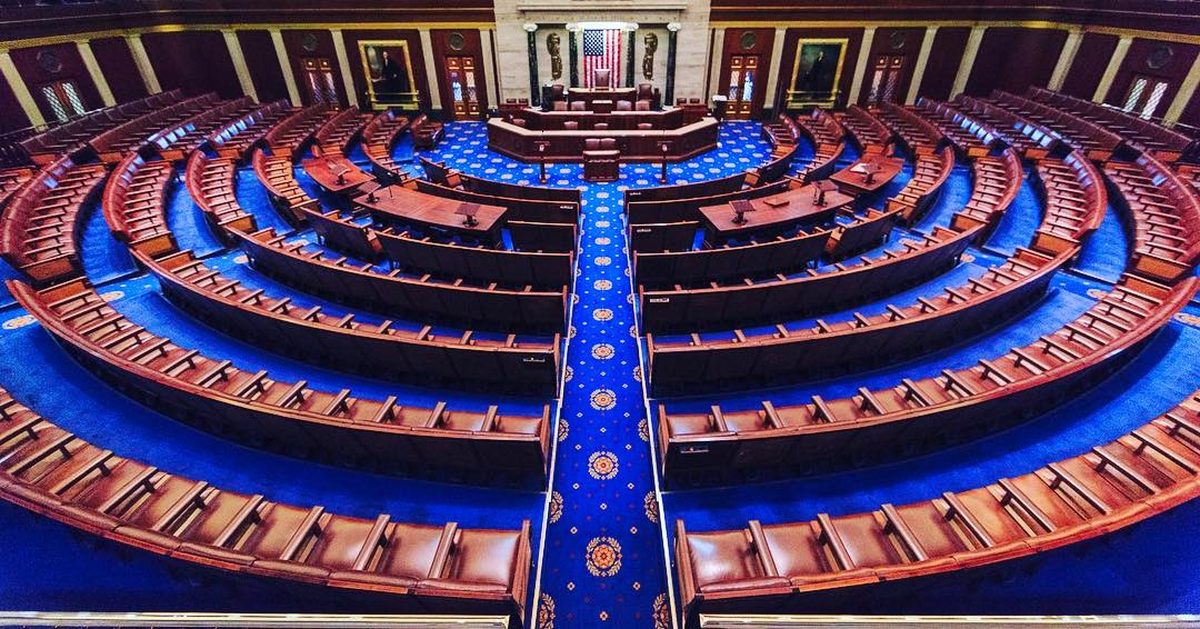
The headline version of Friday's ruling sounds enormous: a federal appeals court says the House of Representatives unconstitutionally passed a $1.7 trillion spending bill. The operative version is much smaller — one workplace law, blocked in one state — and understanding the distance between those two sentences is the whole story.
The ruling, in brief
What the court held
According to Reuters, the 5th US Circuit Court of Appeals voted 9–8 to uphold an injunction blocking enforcement of the Pregnant Workers Fairness Act against Texas, ruling that the House unconstitutionally passed the $1.7 trillion Consolidated Appropriations Act of 2023 using the pandemic-era proxy-voting rule. Writing for the majority, Judge Cory Wilson held that the Constitution's Quorum Clause requires members to be physically present: "'Proxy presence' does not count," and "the Quorum Clause's constraints on congressional power cannot be circumvented by congressional fiat." The logic is mechanical: if proxy members cannot count toward a quorum, and a majority of the House was not physically present on December 22, 2022, then the bill was never validly passed — including the pregnancy-accommodations provision Texas challenged.
What it does not do
It does not void the $1.7 trillion law. Bloomberg Law stresses the limits of the decision in Texas v. Blanche, No. 24-10386: the only relief is the injunction Texas won against one provision, so the Pregnant Workers Fairness Act remains enforceable everywhere else, and the rest of the fiscal 2023 package — defense funding, agency budgets, everything else in those thousands of pages — is untouched by this judgment. Judge James Graves, in dissent, called the majority's ruling "illogical, inexplicable, and invalid," and noted that the relief itself covers only one small provision. The case is, as Reason's analysis of the en banc decision puts it, a narrow judgment carrying a very broad theory.
Why the theory still matters
Two reasons. First, the reasoning is not limited to pregnancy accommodations: if the 2023 act was never validly passed, litigants can argue the same defect infects other provisions of it, and Bloomberg Law notes the decision could invite exactly those challenges. Second, the destination is certain — an appeal to the Supreme Court, which will eventually have to decide whether the Quorum Clause's word "present" means physically present, and whether courts may look behind an enrolled bill at all. Until then, the practical state of play is simple: one federal workplace protection is unenforceable against one state employer, and a $1.7 trillion law everyone has operated under for three years carries a constitutional question mark that only the Supreme Court can erase.
Sources: Reuters (via WNCY) · Bloomberg Law · Reason, The Volokh Conspiracy
Get TrendBrief in your inbox
The day's top stories, explained — free, every morning.
Read us through Google? Add TrendBrief as a preferred source and Google will boost TrendBrief in your Top Stories when you search.