Sports · Explainer
How the AP Top 25 poll works: 62 voters, one points system, and a Sunday deadline
Every Sunday of the college football season, 62 sportswriters and broadcasters turn their ballots into the AP Top 25.
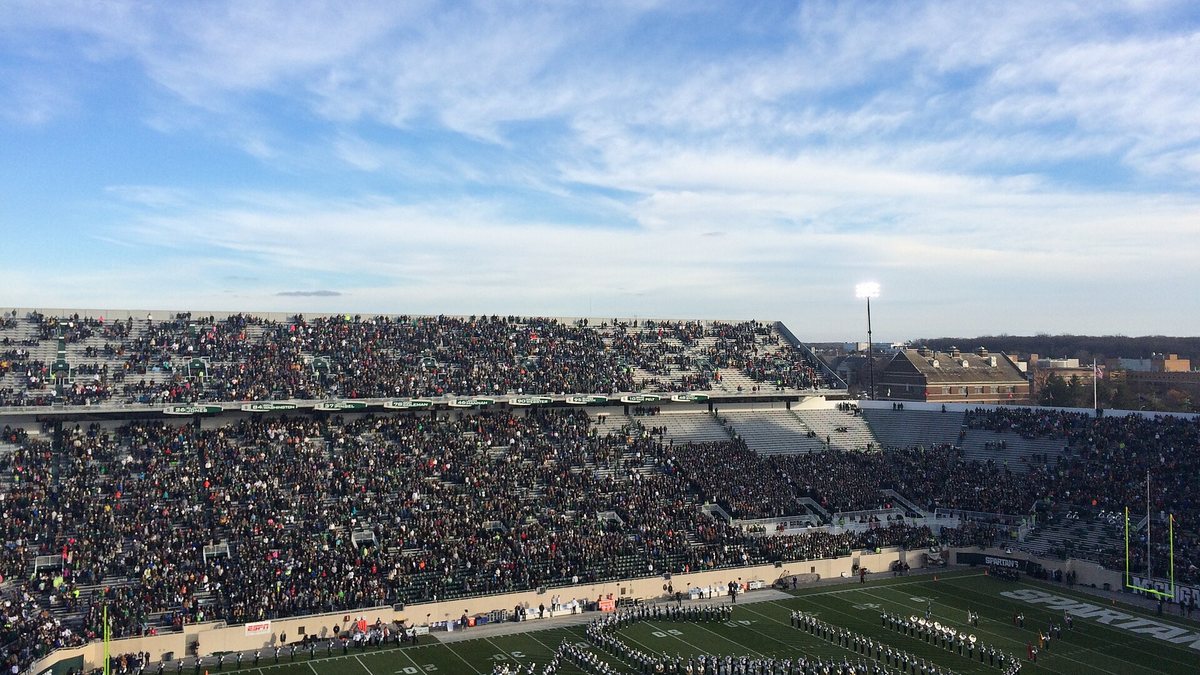
Every Sunday afternoon during the college football season, a single list rearranges the sport's argument for the week: the AP Top 25. It is not produced by a committee in a room, and nobody at the Associated Press votes in it. It is the combined judgment of 62 sportswriters and broadcasters, turned into numbers by a points system that has barely changed in decades. Here is how a weekend of football becomes Monday's rankings.
Key facts
Who votes, and who does not
The voters are around 62 writers and broadcasters who cover college football for AP member outlets and other selected news organizations across the country. The AP chooses the panel and aims to have every state with a Football Bowl Subdivision program represented by at least one voter, alongside several national voters. Two ground rules shape the ballots. AP employees do not vote themselves, even though the AP runs the poll. And every ballot is public: once the rankings are out, you can look up exactly how each voter ranked each team, which is why an unusual ballot can become a story of its own. Voters are asked to judge teams on what they have actually done on the field and to guard against regional bias, the tendency to overrate the teams they see most.
The math: 25 points for first, 1 point for 25th
Each voter ranks their top 25 teams. A team placed first on a ballot gets 25 points, second gets 24, and so on down to 1 point for a 25th-place vote. Add every ballot's points together, sort from highest to lowest, and you have the Top 25. Teams that received votes but finished outside the 25 are listed as "others receiving votes," in point order. Voting is done online and the count is automated, which is how the AP can turn around a finished poll by 2 p.m. Eastern on Sunday, hours after the last Saturday games end. The system also explains the poll's most confusing habit: a team can win and still drop. If voters decide another team's win was more impressive, the points can move against a winner whose victory looked shaky. For the system working at full speed, see our report on Notre Dame's 31-24 win over No. 1 Miami, which sent the voters back to their ballots with the top of the poll wide open.
How the season flows
The first poll of the year is a preseason ranking, published in mid-August, before anyone has played a game. It is an educated guess, and the season spends the autumn correcting it. From the first full weekend onward, the poll appears every Sunday at 2 p.m. Eastern. A final poll is published after the national championship game, and the AP's national champion, crowned from that last vote, is a title the organization has awarded since 1936. That separate tradition matters for the next point: the AP poll is a ranking of opinion, built to measure how the sport's watchers see the field each week.
What the poll does not decide: the playoff
The most common misunderstanding is that the AP Top 25 feeds the College Football Playoff. It does not. The playoff field is chosen by a separate 13-member selection committee, which publishes its own rankings late in the season and seeds the bracket from those. The two lists usually look similar, because both are reacting to the same games, but a team's AP ranking has no formal role in whether it makes the playoff. What the AP poll does control is the conversation: television matchups get billed by AP rankings, "top-five showdown" headlines follow its numbers, and a team's rise or fall in the poll is the weekly report card most fans actually read.
A short history
The poll exists because of an argument. In 1935, AP sports editor Alan J. Gould watched three teams, Minnesota, Princeton and SMU, each claim the national title, and declared it a three-way tie. The next year the AP began polling sportswriters instead, publishing the first ranking in 1936. For most of its life the poll ranked 20 teams, with a Top 10 experiment from 1961 to 1967, and it expanded to the current 25 teams in 1989. Ninety seasons later, the format a reader sees today is recognizably the one Gould built: named experts, public ballots, and a list designed to be argued with.
Get this in your inbox: Get tomorrow morning's stories, and updates to this one: the free TrendBrief email lands each morning with the day's top stories, explained, including the weekend's rankings fallout every Monday. Joining takes seconds, and unsubscribing is one click. The signup form is just below.
Sources: The Associated Press, "Who votes in the poll, and how does it work?" (the voter panel of around 60 writers and broadcasters, AP employees not voting, the goal of representing every state with an FBS school, the 25-to-1 points system, online voting with automated tabulation, and the Sunday 2 p.m. ET release); AP Poll, Wikipedia (62 voters, public ballots, the 1936 start under Alan J. Gould after the three-way tie of 1935, the Top 20 years, the Top 10 from 1961 to 1967, and the expansion to 25 teams in 1989).
Read us through Google? Add TrendBrief as a preferred source and Google will boost TrendBrief in your Top Stories when you search.