Tech · Explainer
Intel stock crashes 29% in its worst day since 1974: a good quarter, a broken forecast and a PC slump
Intel shares fell nearly 29% on Friday to $65.76 — the chipmaker's worst day since July 1974 — after fourth-quarter guidance of $15-16 billion missed the $17.1 billion analysts expected, even though Q3 revenue rose 21% to $16.5 billion and data-center sales jumped 78%.
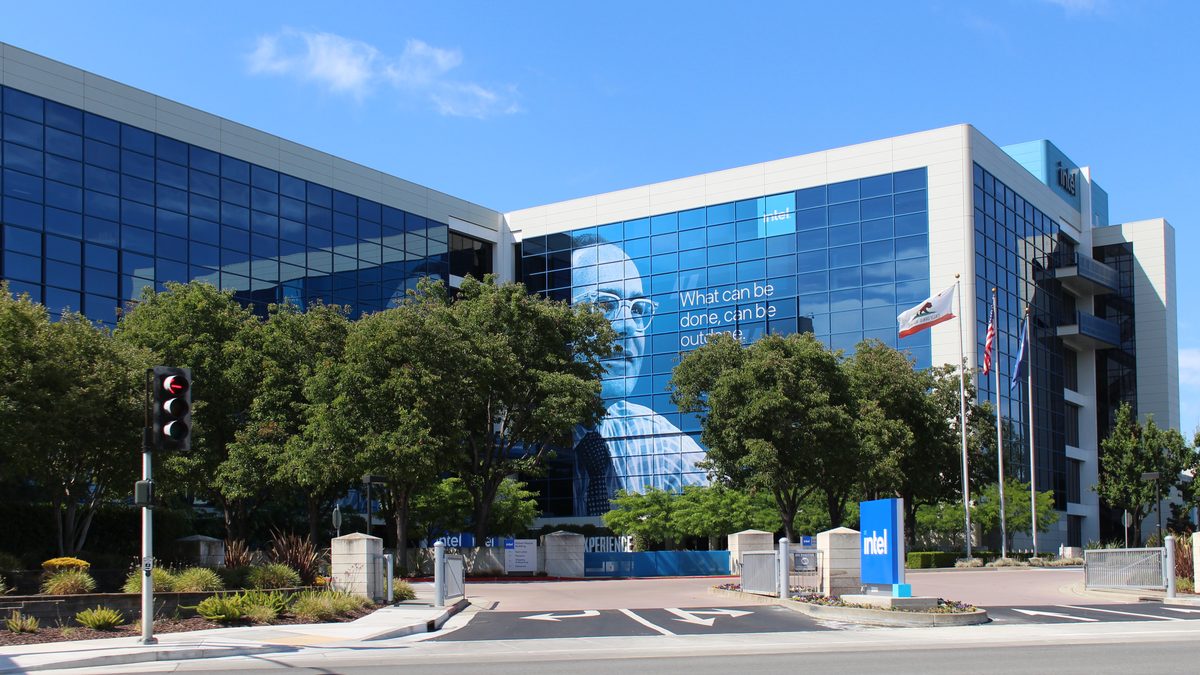
Intel just reported the kind of quarter its investors had been waiting years for — and the stock had its worst day in more than half a century anyway. Shares crashed nearly 29% on Friday, October 30, closing at $65.76, down from $92.07 on Thursday, in the chipmaker's worst single trading day since July 1974, according to Zark News, summarizing Reuters, CNBC and Associated Press reporting. The selloff erased roughly $140 billion in market value and spilled across the whole chip sector, with Nvidia, Broadcom, AMD, Arm, Qualcomm and Micron falling between 4% and 12% on the day, per the same report. The trigger was not the quarter Intel just finished. It was the one it is about to start.
The quarter itself beat expectations
Start with what went right, because it matters for understanding the crash. Intel's third-quarter results, as laid out on its earnings call, showed revenue of $16.5 billion, up 21% from a year earlier, non-GAAP earnings of $0.52 a share (up from $0.23 a year ago, and ahead of the roughly $0.40 analysts expected), and a non-GAAP gross margin of 44.1%. The star was the data-center business: Data Center and AI revenue jumped 78% to $7.3 billion on record server CPU demand from AI buildouts — what CFO David Zinsner called the strongest data-center growth in 15 years. Intel Foundry revenue rose 58% to $6.7 billion, including chips Intel makes for its own product groups. Zinsner noted it was the eighth straight quarter Intel had beaten its own guidance.
Key facts
The forecast that broke it
Against that quarter, Intel guided fourth-quarter revenue to just $15.0 billion to $16.0 billion, well below the $17.1 billion analysts polled by LSEG were looking for, with adjusted earnings of $0.25 a share against $0.43 expected and non-GAAP gross margin dropping to 38.0%, according to the earnings summary drawing on Intel's release and CNBC. The biggest hole is personal computers — still Intel's largest business. Client computing revenue slipped 5% to $8.1 billion in the third quarter, missing estimates, and Intel expects PC unit shipments to fall about 12% in 2026, with second-half units down more than 20%, per the earnings call. "We see the PC slowdown continuing at least through the first half of next year," Zinsner said in the release. The mechanism is the AI boom itself, working in reverse: data centers are absorbing the world's memory supply, memory prices are spiking, PC makers are raising prices and working through inventory — and consumers are buying fewer machines. The same cycle lifting Intel's server business by 78% is squeezing its PC business from the other side.
The Israel fab explosion is in the numbers, too
Part of the guidance miss is a single awful event. An explosion earlier in October at Intel's Kiryat Gat fab in Israel — the plant that makes 10-nanometer server processors — killed two workers and seriously injured a third, according to Reuters reporting cited by TrendForce. The shutdown will cost about $600 million in revenue across two quarters — roughly $300 million in the fourth quarter, shaving about 200 basis points (two percentage points) off gross margin, with a similar hit expected in the first quarter of 2027 — according to TrendForce, reporting Reuters' account of CFO David Zinsner's comments. Coverage of the earnings call also reported Zinsner warning that Intel is unlikely to generate positive free cash flow this year, even as it plans to spend more on factories in 2027.
The government's stake, and what Wall Street did next
Intel is no longer a purely private story. The U.S. Department of Commerce holds a 9.9% stake in the company, and Bloomberg estimates cited in market coverage put the one-day paper loss on that holding at roughly $12 billion — though, as one market roundup noted, the stake remains worth about three times its purchase price. Analysts moved fast on Friday: Bank of America downgraded Intel to Neutral and cut its price target to $100 from $145, with Bernstein (to $75), Roth, Cantor and D.A. Davidson also cutting ratings or targets, per the market coverage. CEO Lip-Bu Tan, who took over in March 2025 to revive a company that missed the first years of the AI boom, framed the turnaround as a multiyear journey and said his immediate priority is unlocking more supply for the Xeon server family, where demand is "extraordinary." Intel also said it expects to announce a couple of external foundry customers in the next two quarters.
Why this matters beyond one stock
Intel's crash landed in the middle of the market's broader October reckoning with AI spending — the same week Amazon's $77 billion spending quarter sank its free cash flow and Alphabet lost roughly $500 billion in a day after its own cash burn. The pattern across all three stories, and Anthropic's IPO filing, is identical: investors are no longer paying for AI promises alone; they are asking which spending produces cash, and how soon. Intel is the sharpest version of the question because its two halves point in opposite directions — a data-center business growing at its fastest pace in 15 years, attached to a PC business in a slump its own CFO says will last into next year. Friday's verdict was that, for now, the second half counts more. The next test is whether Intel's fourth quarter lands at the top of that lowered range — and whether the foundry-customer announcements Tan promised actually arrive.
Read us through Google? Add TrendBrief as a preferred source and Google will boost TrendBrief in your Top Stories when you search.
Sources: Zark News, summarizing Reuters, CNBC and AP (the ~29% Friday close at $65.76 from $92.07, worst day since July 1974, the sector-wide selloff, Q3 revenue +21% to $16.5B, adjusted EPS $0.52 vs $0.40 expected, DCAI +78% to $7.3B, Q4 guidance $15–16B vs $17.1B per LSEG, adjusted EPS $0.25 vs $0.43, gross margin to 38.0% from 44.1%, Zinsner's PC-slump quote, client revenue $8.1B down 5%, the Kiryat Gat explosion and ~$600M two-quarter revenue impact per CNBC, the ~$12B paper loss on the government's 10% stake per Bloomberg estimates, the Friday downgrades, the free-cash-flow warning); Motley Fool earnings-call transcript (non-GAAP EPS $0.52 vs $0.23 a year ago, non-GAAP gross margin 44.1%, Foundry revenue $6.7B up 58%, the ~12% full-year PC unit decline with second-half units down more than 20%, the eight straight guidance beats); TrendForce via Reuters (the ~$300M Q4 revenue hit and ~200bp margin headwind from the Israel fab shutdown with a similar Q1 hit, client revenue guided down in the mid-20s percent in Q4, Tan's supply comments, the foundry operating loss narrowing); Tech Insider (Bank of America's downgrade to Neutral and $145-to-$100 target cut, the Thursday $92.07 close and Friday $68.35 open); WorldAttention market roundup (the ~$140B market value erased, the government's 9.9% stake and its remaining value).