Politics · Explainer
Kushner says Russia is 'comfortable' with NATO-style Article 5 guarantees for Ukraine: what that would actually mean
The guarantee Ukraine has chased since 2022 was described in Berlin as something Russia can live with. The text, the territory question and the votes all still stand between the sentence and a settlement.
Updated Nov 20, 2026, 2:17 PM CT: Russia's deputy foreign minister rejected NATO-style guarantees for Ukraine, calling quasi-membership totally unacceptable.
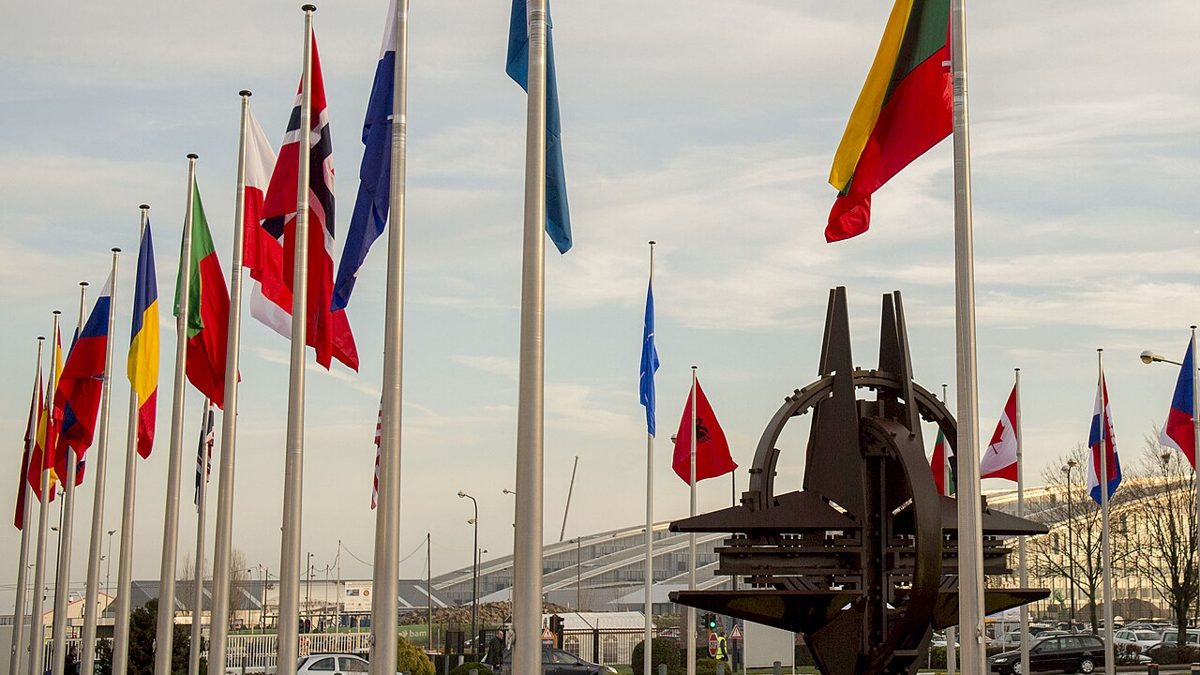

Watch: Kushner's Berlin news conference on the Article 5-style guarantee proposal, from DWS News.
Update — Friday, November 20, 2026: Moscow pushes back, calling NATO-style guarantees "totally unacceptable"
The claim below now has a public answer from Moscow, and it is a rejection. According to Reuters, Russian Deputy Foreign Minister Sergei Ryabkov said on Friday that any form of "quasi membership" for Kyiv in the Western military alliance was totally unacceptable for Moscow, as reported by Russian state media. Asked whether NATO Article 5-style guarantees for Ukraine would be acceptable to Russia, Ryabkov was cited by the Interfax news agency as saying: "even the notion of a formula for Ukraine's quasi-membership of NATO, and the search for some sort of, in inverted commas, 'creative solution' in this area, is an option that is unacceptable to us. We discuss security guarantees first and foremost in terms of ensuring the security of our own country."
Ryabkov also reversed the order Washington described. Reuters reported his condition: "let them recognise the irrevocable nature of our demand that this state must not join NATO. When that happens, I think the issue of security guarantees can be discussed in one way or another." He also confirmed that a possible Moscow visit by representatives of Britain, Germany and France is being worked on. Reuters noted the comments came a day after French President Emmanuel Macron said, after the Berlin summit, that the question of Ukraine's NATO membership should be reopened. The two accounts now sit side by side: the American envoy says Russia is comfortable with the concept, and Russia's deputy foreign minister says the concept itself is unacceptable and that Kyiv's renunciation of NATO must come first.
It is the sentence Ukraine has wanted to hear for nearly five years, delivered with a caveat attached. According to the Associated Press report from Berlin, U.S. envoy Jared Kushner said Thursday he believes Russia is "comfortable" with NATO-like security guarantees for postwar Ukraine. "I think we've gotten the Russians comfortable with that concept where any security guarantee for Ukraine would be based on Article 5," Kushner said, referring to the NATO treaty's rule that an attack on one member is an attack on all. He added that President Trump is "open" to an Article 5-like guarantee, "but obviously it has to be in America's interest to do that," and that it must be part of a broader security package settled in close consultation with Ukraine and Europe.
The Berlin proposal, by the numbers
What an Article 5-style guarantee would and would not be
The distinction in Kushner's wording does real work. Ukraine has long sought actual NATO membership, which Russia has consistently opposed, because membership carries the Article 5 commitment automatically. An Article 5-like guarantee is something else: a promise modeled on the clause, extended to a country outside the alliance, with its exact obligations, who responds, how fast, with what forces, still to be negotiated. Kushner framed Moscow's acceptance as resting on stated intent rather than trust: the Russians' position, as he described it, is that "when this war is over" they do not intend "to have another war in the future." European allies at the Berlin meeting, convened to explore postwar security arrangements, expressed concern about Trump's direct talks with Putin in China even as the envoys reassured them no deal would be imposed unilaterally. Trump himself called into the Berlin talks after his meeting with Putin, according to Kushner.
Why the timing matters, and what to watch
The diplomacy is running on two tracks at once. In Shenzhen on Thursday, Trump met Putin and Xi in a first-ever trilateral that produced a four-point peace declaration but, on Ukraine specifically, no breakthrough. In Berlin the same day, the guarantee language moved further in public than it ever has. Overnight, the war itself continued: Kyiv's mayor reported Russian strikes on the capital, including damage to bridges across the Dnipro. The open questions are the ones that decide whether Thursday's sentence becomes a settlement: whether Moscow's comfort survives contact with an actual text, whether territory, the issue earlier rounds left unresolved, is traded against the guarantee, and whether a guarantee without membership would need, and get, approval in Washington and European capitals. For now, the verified facts are narrower than the headline: the American envoy says Russia accepts the concept, the American president is open to signing it, and, as the update above records, Russia's deputy foreign minister publicly rejected the concept on Friday and set Kyiv's renunciation of NATO as the price of even discussing guarantees.
Sources: Associated Press, via EuropeSays (Kushner's Berlin remarks, the Article 5 quotes, the nearly 40 European leaders, the coalition meeting's purpose and Trump's call into the talks); New York Post (the Shenzhen trilateral's four-point outcome and the absence of immediate Moscow concessions, and Ukraine's largest strike of the war against the Crimea bridge road); Just Security's Early Edition (the overnight Russian strikes on Kyiv and the separate WSJ reporting on NATO membership floated in closed-door talks in exchange for ceded territory, reported here as attributed reporting, not as part of the Berlin announcement); Reuters (Ryabkov's Friday pushback via Interfax and Russian state media: "quasi membership" totally unacceptable, the NATO-renunciation precondition, the possible Moscow visit by British, German and French representatives being worked on, and the Macron context).
Get TrendBrief in your inbox
The day's top stories, explained — free, every morning.
Read us through Google? Add TrendBrief as a preferred source and Google will boost TrendBrief in your Top Stories when you search.