Health · Explainer
America's measles-free status is being decided this week, and the CDC chief says the response will not change either way
A PAHO panel in Washington is weighing 12 months of transmission against a status held since 2000. The CDC's answer, from its director, is that the work does not change.
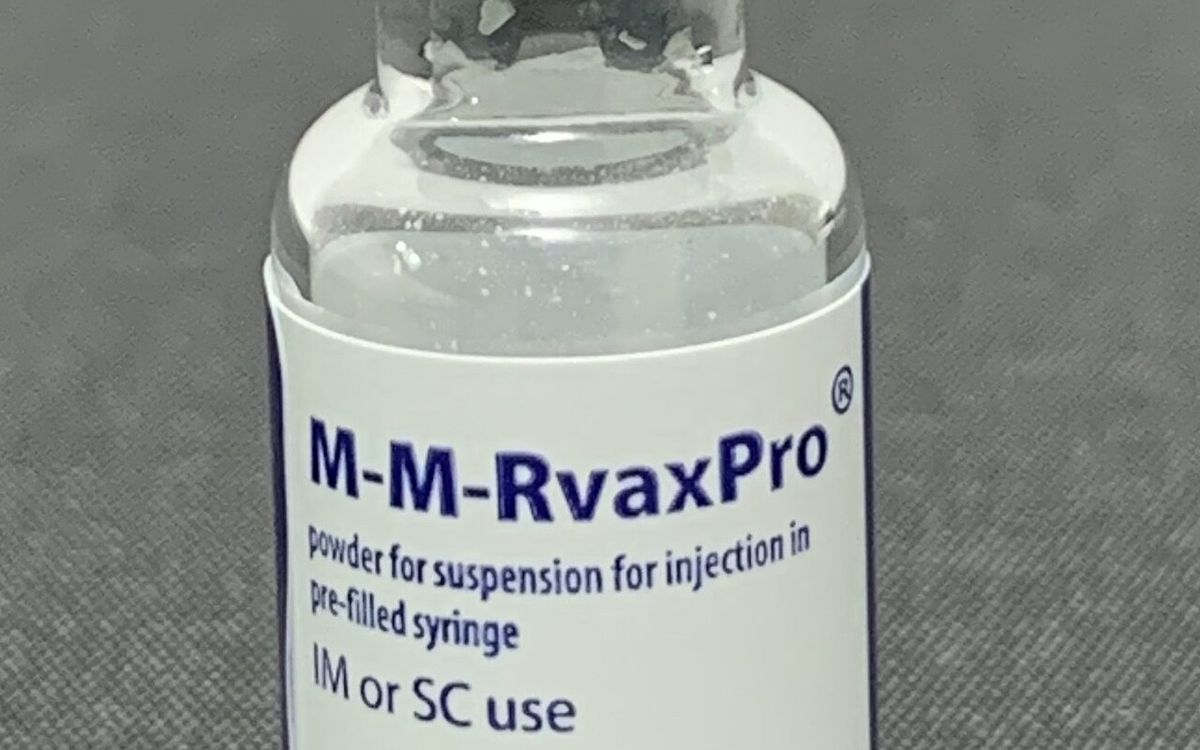
A status the United States has held for 26 years is being decided behind closed doors in Washington this week. Global health experts convened by the Pan American Health Organization will determine in the coming days whether the US has lost its official measles-free status, according to Reuters reporting carried by CNN, and CDC Director Dr. Erica Schwartz told Reuters on Tuesday that her agency will not fundamentally change its response either way: "Let's say we did lose our measles elimination status. We're going to be doing the same exact thing that we've been doing today, which is working with the states."
Key facts
What the panel is actually deciding
Elimination does not mean zero cases. It means no continuous, homegrown transmission for at least 12 months, with imported cases stamped out quickly. The test before the PAHO commission, holding its sixth annual meeting in Washington from November 10 to 13, is whether transmission that began with the West Texas outbreaks of January 2025 has now run uninterrupted for a year. The case counts are not in dispute: the CDC's November 6 update counts 5,182 confirmed cases as of November 5, 5,164 of them reported by 47 jurisdictions and 18 among international visitors, with 43 new outbreaks in 2026 and 96 percent of cases outbreak-associated. What may decide the outcome is genomic data linking, or failing to link, the chains of outbreaks that began in Texas. PAHO asked all 35 member states in the Americas for status reports; Mexico and Bolivia are also on the watch list for prolonged outbreaks, a PAHO spokesperson told Reuters, and PAHO Director Jarbas Barbosa makes the final decision on each country. Schwartz said she expects the decision by early next week. The death toll, notably, is in dispute: local health departments report eight deaths this year while the CDC has recorded four, a gap we noted in our November 7 explainer on the 5,182-case count.
Why the CDC chief is pre-answering the verdict
Schwartz, confirmed as CDC director in August, pointed to "closely knit communities" as the primary source of US infection, including Amish communities in Pennsylvania where vaccination decisions made 20 to 30 years ago are, in her words, producing results now. "The number one way to prevent measles is the MMR vaccine," she said, adding the agency will lean in on awareness with state health departments regardless of the ruling. The politics sit close to the surface: Health Secretary Robert F. Kennedy Jr. has for years cast doubt on MMR's safety, medical experts told Reuters his rhetoric has fueled falling vaccination rates, and in August the administration unveiled an executive order calling for breaking the MMR shot into three separate injections, a change pharmaceutical companies said could take years. Schwartz pushed back on reports that Kennedy's team has pressured her, saying the decisions rest on her shoulders.
What changes if the status is lost, and what does not
Practically, on day one, very little changes at the clinic level, which is Schwartz's point: state outbreak response, vaccination drives and case tracing continue either way. What is lost is standing and signal. Elimination status, earned in 2000, is the formal proof that a country's surveillance and vaccination systems catch measles before it re-establishes itself, and losing it puts the US in a small group of countries where the disease is again considered endemic. It also raises the stakes for travel medicine and for the schools and communities where coverage has slipped: with cases already more than double last year's total and public health experts warning the count could pass 7,000 by year's end, the ruling expected early next week will read less like a verdict on one outbreak than on two years of them.
Sources: Reuters via CNN (Schwartz's statements, the 26-year status, nearly 5,200 cases and 11 deaths since early last year, the close-knit communities comments and the MMR executive order context); Reuters (the PAHO process, the 35 member-state reports, the Mexico and Bolivia watch list, Barbosa's final decision and the 12-month transmission test); CDC measles case data as of November 5, 2026 (5,182 confirmed cases, 47 jurisdictions, 43 outbreaks, 96 percent outbreak-associated).
Read us through Google? Add TrendBrief as a preferred source and Google will boost TrendBrief in your Top Stories when you search.