Politics · Explainer
Newsom commuted all 548 California death sentences to life without parole. Here is what happens next, and what it does not change
Gov. Gavin Newsom announced Thursday he is commuting every California death sentence, all 548 of them, to life in prison without parole, the largest mass commutation in U.S. history, according to the Death Penalty Information Center.
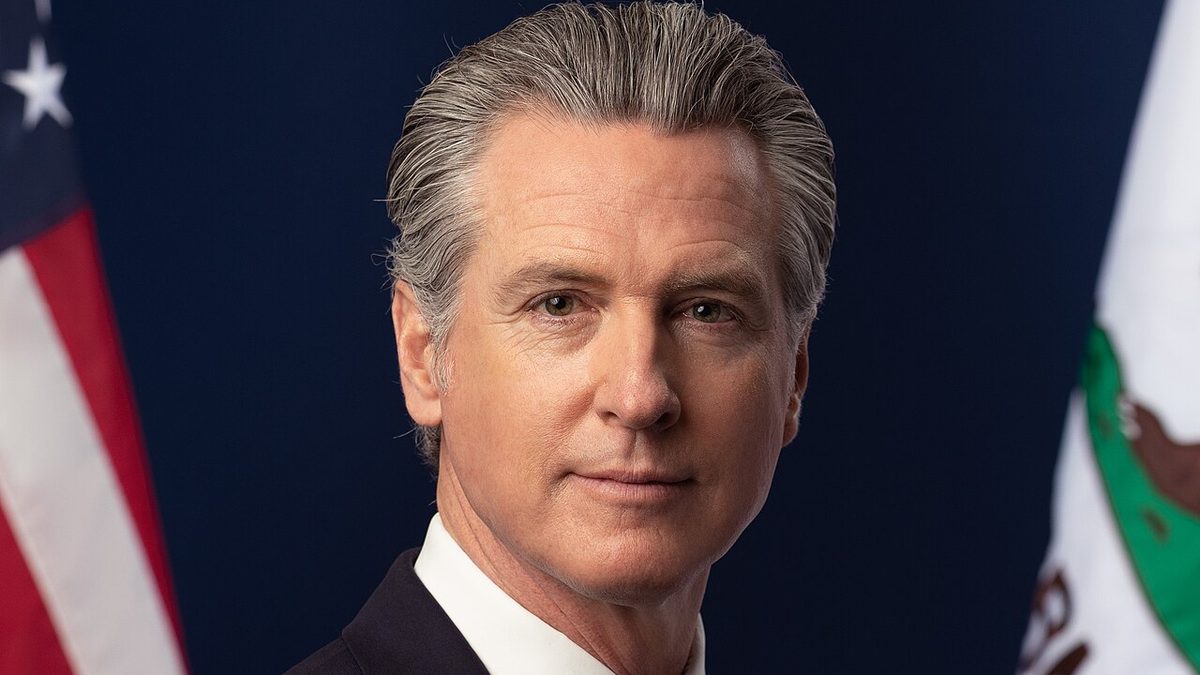

Watch: NBC News on Gov. Newsom's commutation of every California death sentence, with legal analyst Danny Cevallos on what happens next, from NBC News.
California's death row is the largest in the country, and on Thursday its governor announced he is emptying it. According to the Associated Press, Gov. Gavin Newsom is commuting the sentences of all 548 people on California's death row to life in prison without the possibility of parole, in what the Wall Street Journal, citing the Death Penalty Information Center, called the largest mass commutation of death sentences in U.S. history. In an open letter, Newsom wrote that "state-sanctioned killing is incompatible with California's values, undermines the foundations of our legal system, and diminishes each of us," and he told reporters the "reprehensible" punishment was among the most difficult issues of his career. Newsom is term-limited, leaves office in January, and is widely seen as weighing a 2028 presidential run, a context CNN and Reuters both noted.
Key facts
Why 382 cases go to the state Supreme Court first
One signature does not finish this. Under the California Constitution, a governor needs the state Supreme Court's recommendation before granting clemency to anyone convicted of more than one felony, and 382 of the 548 people fall in that group, according to the governor's office. At least four of the court's seven justices must agree in each case. As the legal news site Law Commentary explains, Newsom can act on the remaining roughly 166 cases on his own authority, and those commutations take effect on his action alone, while he has asked the court to deliver its recommendations by the end of 2026, before he leaves office. The governor's office says the row holds 529 men and 19 women.
What this does not do
Three limits matter. First, nobody is being released: every sentence becomes life in prison without parole, and the underlying convictions stand untouched. Second, the death penalty itself remains California law. Voters chose to keep it in 2012 and again in 2016, and as Los Angeles County District Attorney Nathan J. Hochman put it in his response, abolition "remains a decision of the voters," not of one governor. Prosecutors can still seek death sentences in new murder cases, and a future governor could reverse course on clemency policy. Third, executions were already not happening: Newsom imposed a moratorium in March 2019, two months into his first term, and California last executed someone in 2006, when Clarence Ray Allen was put to death. The row kept growing anyway because juries kept handing down death sentences, 42 in 1999 but only 5 in 2025, as sentencing has slowed sharply.
Who is on the row, and who reacted how
The 548 include some of California's most notorious killers: Randy Kraft, known as the Southern California Strangler; Charles Ng, convicted in the 1980s torture murders of 11 people; and Richard Allen Davis, whose 1993 kidnapping and murder of 12-year-old Polly Klaas reshaped California criminal law. Reactions split along familiar lines, with one notable exception. The ACLU's Anthony D. Romero praised the move as "a powerful step toward an end to a racist, error-prone, and inhumane punishment," and the Death Penalty Information Center notes that 68% of the people on California's row, as of April 2025, were defendants of color. The Criminal Justice Legal Foundation, the group Crime Survivors, and the California District Attorneys Association all condemned it, arguing it harms victims' families and overrides voters and juries. But Polly Klaas's sister, Jess Nichol, supported the commutation publicly, saying it gives families finality instead of decades of appeals. Contra Costa District Attorney Diana Becton argued the state will save hundreds of millions of dollars over the long term because death penalty cases cost far more to litigate and house. Victims' advocates told reporters they intend to challenge the commutations in court.
The wider moment
Newsom's move lands weeks after Tennessee's chaotic, ultimately failed attempt to execute Christa Pike in late September renewed national scrutiny of capital punishment, and it follows similar end-of-term commutations by governors in North Carolina, Oregon and Colorado, though none at this scale. It also arrives two days after the midterm elections reshaped Washington. The practical timeline now runs through the state Supreme Court: if at least four justices back the recommendations in the 382 contested cases by year's end, the largest death row in America will be gone before Newsom leaves Sacramento, replaced by 548 life-without-parole sentences that no future election can shorten.
Sources: Associated Press, via Corrections1 (the announcement, the 548 and 382 figures from the governor's office, the open letter and the victims' family outreach); CNN (the named cases of Kraft, Ng and Davis, the reactions from Romero, Hochman, Becton, Nichol and the opposing groups, the 68% figure, the sentencing decline, the 2019 moratorium and the Christa Pike context); The Wall Street Journal (the largest-in-history characterization via the Death Penalty Information Center, the 529 men and 19 women, the end-of-term timing and the "most difficult decision" framing); Law Commentary (the constitutional approval rule, the roughly 166 cases the governor can act on alone, and the request that the court act by the end of 2026); USA Today (corroboration of the commutation and the court-review split). The last-execution date of 2006 and the 13 executions since 1976 are California Department of Corrections and Rehabilitation figures cited across the coverage above.
Read us through Google? Add TrendBrief as a preferred source and Google will boost TrendBrief in your Top Stories when you search.