Travel & History · Explainer
The fastest ocean liner ever built is now the world's largest artificial reef: the SS United States, explained
The liner that still holds the Atlantic speed record from 1952 slipped under the Gulf on Wednesday night, on purpose, to become the biggest man-made reef on the planet. Here is how, and why Florida paid $13.5 million to sink her.

Watch: PBS NewsHour's coverage of the sinking, from PBS NewsHour.
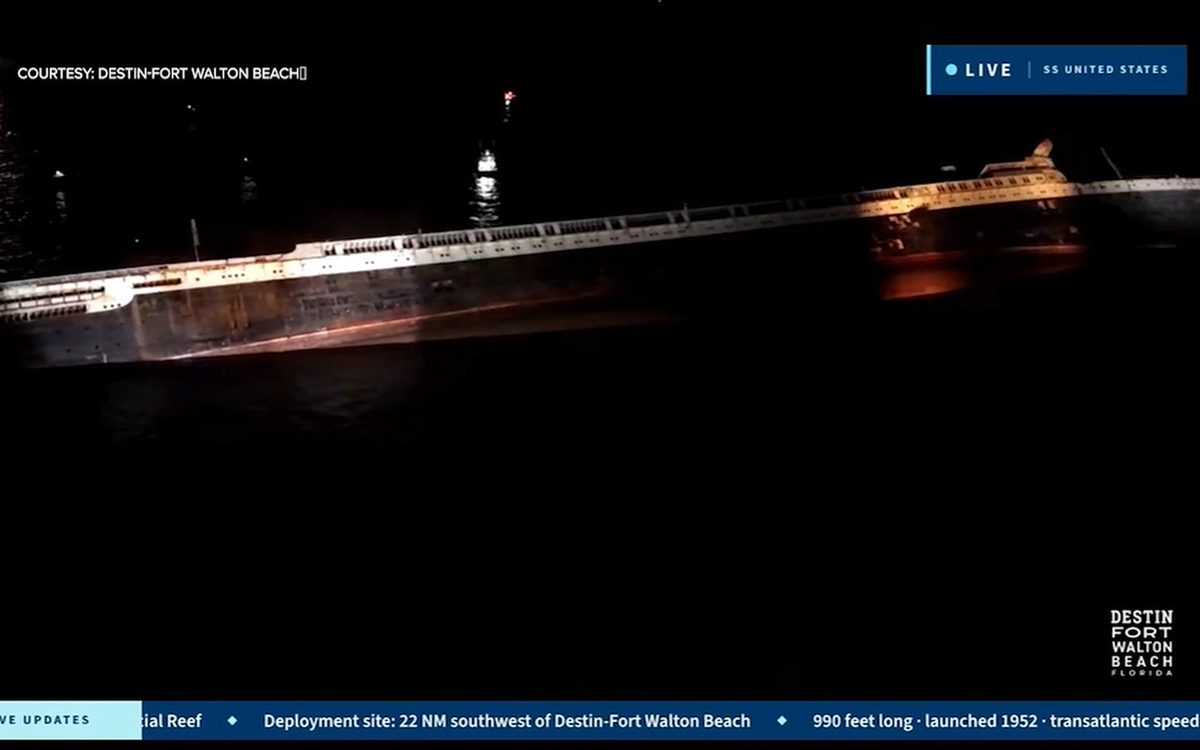
She went down the way she crossed the Atlantic: on a schedule nobody else could match. The SS United States settled beneath the Gulf's surface at 9:59 p.m. ET on Wednesday, seven hours and 19 minutes after flooding began at about 2:40 p.m., according to USA Today's running account of the sinking. The 990-foot liner now rests about 22 nautical miles southwest of Destin, Florida, in roughly 180 to 200 feet of water, her top deck about 60 feet below the surface, close enough for experienced divers and far enough to become habitat.
Key facts
Why a county paid to sink a legend
Okaloosa County bought the ship in 2024 and spent $13.5 million preparing her as a dive and fishing reef, with a land-based museum planned in Destin. The economics are the same ones that sank the Oriskany 13 nautical miles away: the Florida Panhandle holds more than 500 artificial reefs, and a famous wreck draws dive boats, anglers and research money for decades, according to Reuters. The sinking itself was moved up a day because of weather expected Thursday. She was towed out of Mobile on Monday, and getting her down took longer than her fans who watched the livestream expected: as DeeperBlue's account of the final hours notes, she listed heavily in her last minutes, and whether she came to rest upright had not been confirmed when it published.
The record she takes with her
The SS United States was built as both a luxury liner and a secret weapon, designed to convert into a troopship. On her maiden voyage in July 1952 she crossed the Atlantic at an average 41.4 mph and took the Blue Riband from the Queen Mary, a speed record for a passenger liner that has never been beaten, according to the Associated Press account carried by The Weather Channel. She carried presidents and movie stars, made more than 800 crossings, and was retired in 1969 as jets took the Atlantic. What followed was 55 years of failed rescue plans, a long berth in Philadelphia from 1996, a tow south in February 2025, and one last legal fight: a federal judge denied an emergency motion to stop the sinking on November 7.
What happens next
Marine life will colonize the hull through the winter, and the county expects the reef to open to divers once surveys confirm how she settled, upright or not. Whatever the angle, the record books close cleanly: the fastest ocean liner ever built is now the largest artificial reef on Earth, 22 miles off the Florida coast, in water her own designers never imagined her sailing.
Sources: USA Today (the 9:59 p.m. settling time, 7 hours 19 minutes of flooding, the 22 nautical miles and depth figures, the weather-driven schedule change, the November 9 Mobile tow); Reuters (the $13.5 million county project, the 500-plus Panhandle reefs, the November 7 court ruling); Associated Press via The Weather Channel (the 1952 Blue Riband crossing at 41.4 mph, 800-plus crossings, the 1969 retirement); DeeperBlue (the heavy list in the final minutes and the unconfirmed resting position).
Read us through Google? Add TrendBrief as a preferred source and Google will boost TrendBrief in your Top Stories when you search.