Tech · Explainer
Voyager 1 is now one light-day from Earth, and every conversation with it takes two days
At 5:16 a.m. Eastern, a spacecraft launched in 1977 crossed a distance light needs a day to travel. What a light-day is, why the crossing is permanent, and how a 22-watt transmitter still gets heard.

Watch: NASA's Jet Propulsion Laboratory explains what one light-day means, from NASA Jet Propulsion Laboratory.
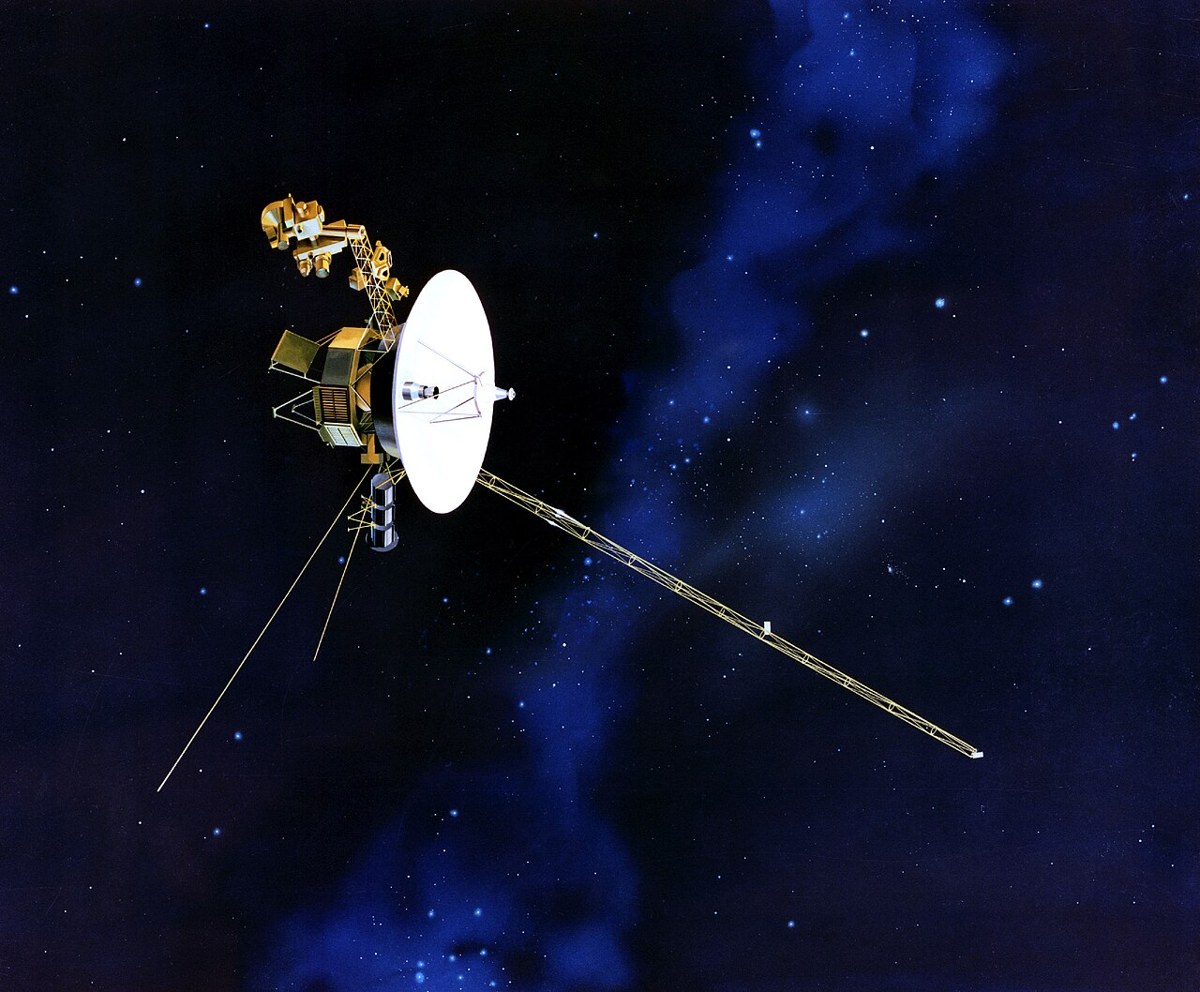
A light-day is not a place. It is a delay. According to NASA's countdown page for the milestone, Voyager 1 reached one light-day from Earth at 5:16:07 a.m. EST on Wednesday, November 18, 2026, a distance of about 16 billion miles (about 26 billion kilometers) that light itself needs a full 24 hours to cover. Nothing changed aboard the spacecraft at that moment, and that is the point: the milestone measures how long Earth now waits to hear from a machine it launched 49 years, two months and two weeks ago, on September 5, 1977, which is still answering.
Key facts
How a 1977 spacecraft is still talking
Voyager 1 became the farthest human-made object on February 17, 1998, when it passed Pioneer 10, and on August 25, 2012 it crossed the heliopause, the edge of the Sun's bubble, into interstellar space at about 11.3 billion miles from the Sun. It talks to Earth through NASA's Deep Space Network, the worldwide system of giant antennas, using a transmitter of about 22 watts; by the time the signal arrives it is fantastically faint, and the conversation has grown slower with every mile. It has not been smooth lately: NASA's October 29 mission update reported the signal was lost during scheduled sessions on October 18 and 19, then detected again on October 20 after a set of thrusters went offline and backups switched on, the spacecraft protecting itself the way it was programmed to nearly five decades ago. Its twin is not far behind in spirit: Voyager 2 is about 13.4 billion miles out at roughly 34,000 mph and, per Astronomy magazine's account, will not reach its own light-day until November 2035.
What NASA asked the public to do about it
The agency marked the crossing the night before it happened: after sunset on Tuesday, November 17, NASA invited everyone to "Shine Bright for Voyager's Light-Day," flashing the spacecraft's call sign, V-G-R, skyward in Morse code with a flashlight or phone, a symbolic signal Voyager cannot see but the species that built it can. On Thursday, November 19, at noon Eastern, the Jet Propulsion Laboratory hosts a public discussion of both Voyagers' status, streaming on NASA's live channels. Project scientist Linda Spilker, who was working on Voyager in 1977, told ScienceAlert: "When I was first working on Voyager back in 1977, I never expected Voyager 1 to reach one light-day." The spacecraft carries the Golden Record, a gold-plated copper disc of Earth's sounds and images, which is now, by the only yardstick that matters out there, a full day away at the speed of light, and still receding.
Sources: NASA's Voyager light-day page (the crossing time, the distance definition and the Shine Bright invitation); ScienceAlert (the permanence of the crossing, the 1998 and 2012 milestones and the Spilker quote); Astronomy magazine (Voyager 2's distance, speed and 2035 light-day, and the JPL discussion); the Detroit Free Press (the two probes' speeds and distances and the Thursday JPL event).
Read us through Google? Add TrendBrief as a preferred source and Google will boost TrendBrief in your Top Stories when you search.