Money · Explainer
How mortgage rates are set: the bond market, the Fed, and your credit score
The Federal Reserve does not set your mortgage rate. Here is the four-layer stack that does: the 10-year Treasury yield, mortgage bond investors, guarantee fees, and your own lender and credit profile, plus where the famous Thursday rate number comes from.
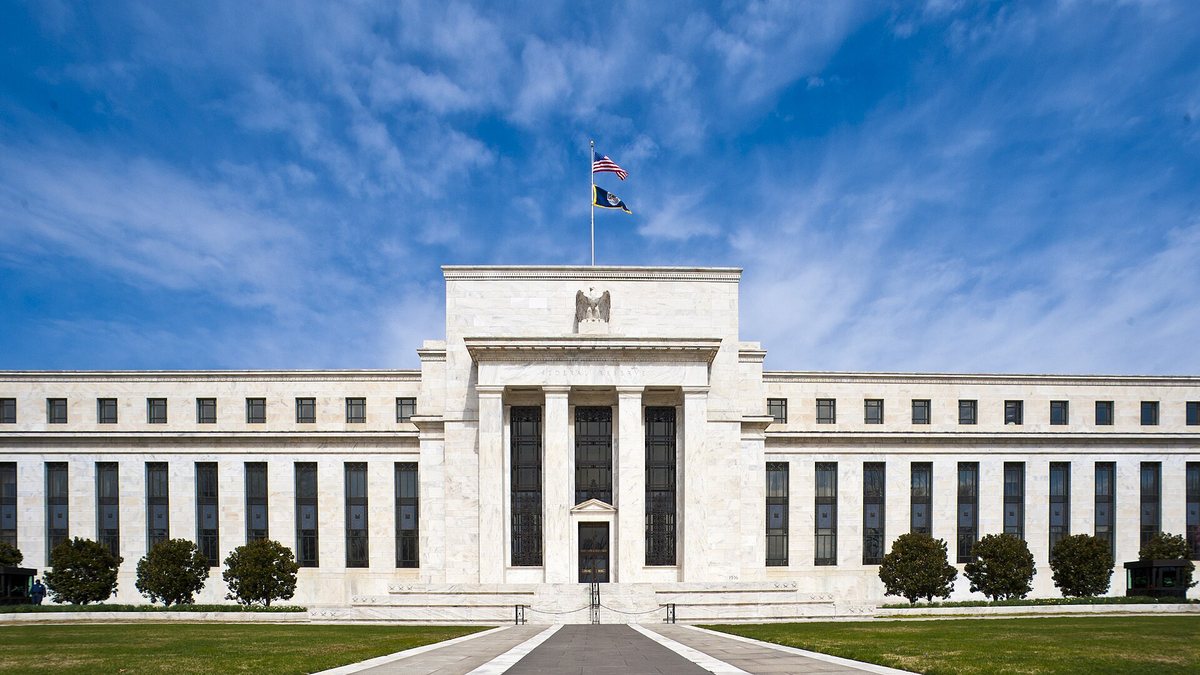
When the Federal Reserve raises or cuts interest rates, mortgage rates are supposed to follow. Sometimes they do the opposite, and the reason is simple once you see the machinery: the Fed never sets your mortgage rate. Your rate is built in layers, by bond traders, mortgage investors, two government-backed companies, your lender, and finally your own credit file. Here is each layer, in the order the money flows.
Key facts
Layer one: the 10-year Treasury yield
A 30-year fixed mortgage sounds like a 30-year loan, but most borrowers sell or refinance long before then, so investors treat it as roughly a decade-long bet. That is why the rate tracks the yield on the 10-year Treasury note, the government's benchmark decade-long IOU, whose yield you can follow in the Federal Reserve Bank of St. Louis's FRED database. When investors expect stronger growth or stickier inflation, they demand higher yields on long-term bonds, and mortgage rates climb with them. When fear hits markets, money rushes into Treasuries, yields fall, and mortgage rates usually ease. The Fed's own rate, the federal funds rate, is an overnight rate for banks. It moves credit cards and home equity lines almost directly, but a 30-year mortgage mostly takes its cue from the bond market's view of the next ten years.
Layer two: mortgage bonds, and the price of your right to refinance
Your lender rarely keeps your loan. Most mortgages are bundled into mortgage-backed securities and sold to investors, and the price those investors will pay sets the second layer of your rate. Investors demand extra yield on mortgage bonds for a risk Treasury bonds do not have: you can hand the money back early. If rates fall, borrowers refinance and investors lose a high-paying loan. If rates rise, borrowers sit tight and investors are stuck holding a low-paying one. That one-sided risk is why the gap between mortgage rates and the 10-year Treasury, often called the spread, exists at all, and why it widened to around 2 percentage points in recent years, above its long-run level of roughly 1.7 points, when rate volatility made the refinance gamble harder to price.
Layer three: the guarantee that keeps the money flowing
Most of those mortgage bonds carry a guarantee from Fannie Mae or Freddie Mac, the government-sponsored companies that stand behind the payments if borrowers default. The guarantee is not free. Lenders pay a guarantee fee that is passed through into rates, and according to the Federal Housing Finance Agency, that fee averaged about 0.49 percentage points on new single-family loans acquired in 2024. The fee is one reason American borrowers can lock a rate for 30 years at all: investors accept lower yields because the credit risk sits with the guarantors, not with them.
Layer four: your lender, and you
The last layer is personal. Lenders add their own margin and then adjust for the risk in your specific file using a pricing grid. Credit score and down payment do the heaviest lifting. The Consumer Financial Protection Bureau's rate explorer shows the pattern: a borrower with a credit score below 640 putting 20% down can be charged an upfront pricing adjustment of 2.750% of the loan amount, while a borrower with a score of 780 or higher pays 0.375% for the same loan, a difference lenders recover through the rate. When you lock, whether you pay points to buy the rate down, and how many lenders you quote all move the final number as well. Freddie Mac's own research has repeatedly found that applying with multiple lenders saves borrowers money, which is why the layer you control most is the shopping itself. For this week's numbers, see our running tracker, Mortgage rates today, and for the politics behind the bond market's mood, our coverage of the Fed's October rate decision and the October jobs report.
So where does the headline rate come from?
The rate in the headlines is Freddie Mac's Primary Mortgage Market Survey, published every Thursday at noon Eastern. Since a methodology change in November 2022, it is built from actual mortgage applications submitted through Freddie Mac's Loan Product Advisor system, not from phoning lenders for quotes. The headline figure assumes a conventional, conforming purchase loan with 20% down and excellent credit, which is why your own quote can sit well above or below it. The St. Louis Fed republishes the series in FRED within hours. Read it as the market's center of gravity, not as a price quote: the stack above decides where you land around it.
Get this in your inbox: Get tomorrow morning's stories, and updates to this one: the free TrendBrief email lands each morning with the day's top stories, explained, and it follows the rate story as it develops. Joining takes seconds, and unsubscribing is one click. The signup form is just below.
Sources: Freddie Mac, Primary Mortgage Market Survey (the weekly average rate, its Thursday noon ET release, and the survey methodology built on Loan Product Advisor applications since November 2022); Federal Housing Finance Agency, Single-Family Guarantee Fees in 2024 (the average guarantee fee of about 0.49 percentage points); Consumer Financial Protection Bureau, Explore Interest Rates tool (the loan-level pricing adjustment examples by credit score and down payment); Federal Reserve Bank of St. Louis, FRED (the 10-year Treasury yield series and the 30-year mortgage average series).
Read us through Google? Add TrendBrief as a preferred source and Google will boost TrendBrief in your Top Stories when you search.