Tech · Explainer
Washington has asked Musk to switch Starlink on and off for years — Ukraine is only the latest case
Reuters reports the Biden and Trump administrations repeatedly asked Elon Musk to turn Starlink on or off — off for Houthi and Hezbollah terminals, on for Iran and Ukraine.
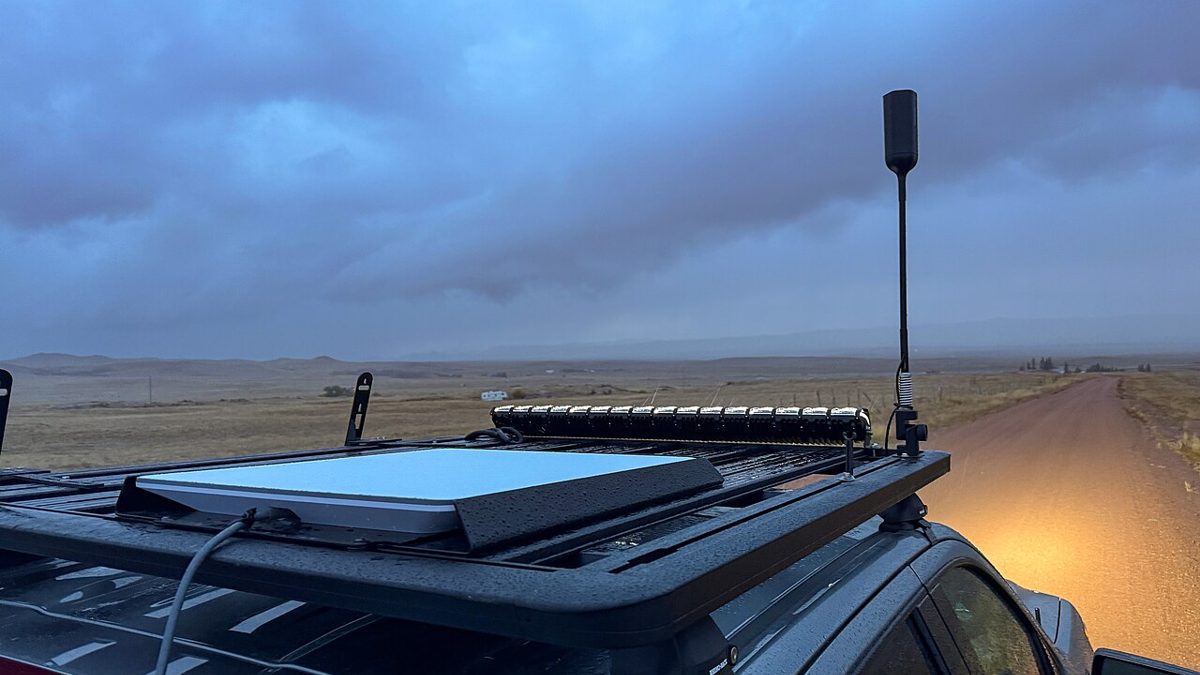
Update — Sunday, October 25, 2026: Musk says SpaceX throttled Starlink itself — and Ukraine says his reason is impossible
The blame argument below has a new claimant: SpaceX itself. In a post on X this weekend, Elon Musk alleged that Ukraine's armed forces "violated Starlink terms of service and used it for offensive drone strikes to kill people," and said "that loophole was closed last week," according to CNN. Ukrainian officials dispute that premise and say long-standing restrictions made such use of the civilian system impossible (see below); no independent corroboration of Musk's allegation is cited in the reporting. That statement indicates the civilian Starlink service was restricted — separate, Musk again maintained, from the Starshield speed cap, which he said is a different system controlled by the U.S. government. Musk did not say in the post who closed what he called the loophole, according to NPR, and he added that Starlink "remains critical to the defense of Ukraine," claiming the front line would "collapse immediately" if it were turned off.
Ukrainian officials flatly dispute the premise. Serhiy Beskrestnov, a defense technology adviser to President Volodymyr Zelenskyy, said long-standing restrictions on the civilian system in Ukraine made such offensive use impossible: "It's very strange that Elon Musk doesn't know about the restrictions on Starlink's operation in Ukraine," he wrote, according to the Associated Press. Serhiy Sternenko, a former Ukrainian defense ministry adviser, told CNN it was "technically impossible to use the civilian Starlink system for drone missions," because missions needing satellite communication could only run on Starshield. On Sunday, Zelenskyy told NBC's Meet the Press that Ukrainian officials believed the U.S. government was behind the disruptions, and that SpaceX imposed its restrictions in response to a "message from [the] American government," according to NPR. The political fallout reached Congress the same day: Sen. Adam Schiff told Meet the Press that Defense Secretary Pete Hegseth should testify to clarify who ordered the limits — "You've got the president saying one thing, you've got Elon Musk saying another thing… Somebody is lying here. Maybe they're all lying in different ways, but we need to find out." The Saturday restoration described in the update below still stands; what remains unresolved is who restricted what, and why.
Update — Saturday, October 24, 2026: Ukraine says Starlink speeds are restored
The slowdown is over, at least on Ukraine's instruments. According to Reuters, Ukraine's Ministry of Defence said on Telegram on Saturday that its monitoring systems are "officially recording the restoration of Starlink/Starshield operating speeds," with connectivity stable at speeds exceeding 400 km/h (about 250 mph) — against problems above 160 km/h while the cap was in place. The ministry did not say whether service had been fully restored, and CNN reported one source in the Donetsk region said speeds there were still limited to 160 km/h on Saturday morning.
Later Saturday, President Volodymyr Zelensky confirmed that Starlink and Starshield had resumed operations at the speeds they had before the restrictions, calling the services "crucial for our frontline logistics and for defending Ukraine against jet-propelled Shaheds," according to CNN. CNN also reported, citing a person familiar with the matter, that Trump asked Musk in a phone call in recent days to restore Ukraine's full Starshield access; asked about the call, Trump told reporters: "Whether I called or whether somebody else called, doesn't make any difference, I guess. The bottom line – he put it back." As of Friday evening, Ukrainian officials were still saying the limits persisted — which is why the reporting below describes only a partial restoration. Who ordered the throttle in the first place remains unacknowledged: according to Reuters, neither Musk nor the U.S. government has accepted responsibility, and each has said publicly that the decision could only have been the other's.
Ukraine's drones started stuttering this month when SpaceX's military satellite service slowed down — and the argument over who ordered it is still running. A Reuters investigation published Saturday shows the fight sits on a much longer history: according to six former senior U.S. officials, the Biden and Trump administrations have repeatedly asked Elon Musk to turn Starlink service on or off in specific countries — requests Reuters says are being reported for the first time. The pattern shows two administrations relying, in Reuters' phrase, to an unprecedented degree on a private company to carry out foreign policy.
First, the slowdown everyone is arguing about
SpaceX capped its military-grade Starshield service in Ukraine at 100 miles per hour (160 km/h), disrupting combat missions, according to Reuters' October 14 report quoting presidential adviser Serhiy Beskrestnov: "Our defence forces did not receive a warning about this limitation, and this led to the disruption of several missions." Starshield receivers, largely impervious to jamming, guide Ukrainian drones and link them to remote pilots, including deep behind Russian lines. President Volodymyr Zelenskiy said the limits were intentional and also slowed the Starlink service Ukraine uses for defense against Russian missile attacks. Reuters has reported the order to throttle Starshield came from inside the White House; the Trump administration has acknowledged the slowdown but not said whether it ordered it. Musk posted this week that "Starshield systems are owned and controlled by the US government" and that speed limits are decided by the U.S. military and ultimately the president. On Thursday, the Wall Street Journal reported, via Reuters, that Trump called Musk and asked him to lift the restrictions; the system worked more normally afterward, though Ukrainian officials said not at full speed. Asked about it Friday, Trump said he had not spoken with Musk about Ukraine's access and that "if there is a problem, I'll get it straightened out."
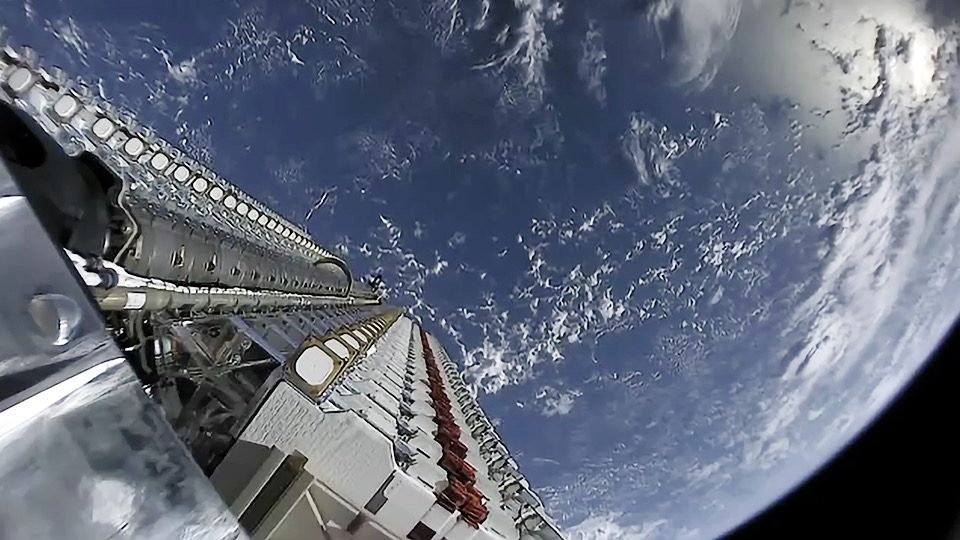
The requests Reuters documented
- Off — Yemen and Lebanon (Biden era): officials shared intelligence that Iran-linked Houthis in Yemen and Hezbollah in Lebanon were using diverted Starlink terminals — Hezbollah concerns surfaced in October 2023, Houthi concerns in 2024 — and asked SpaceX to identify and shut those terminals off. At least some were deactivated, two officials told Reuters.
- On — Ukraine (2022): soon after Russia's full-scale invasion, Biden officials pushed SpaceX to expand Starlink use for the Ukrainian military — the start of the dependence now at issue.
- On — Iran (2022): during the protest movement after the death of Mahsa Amini in September 2022, the Biden administration asked SpaceX to turn Starlink on inside Iran, and terminals were moved into the country with the administration's help.
- On — Iran again (2025-2026): the Trump administration discussed getting terminals into Iran and activated after U.S.-Israeli strikes in June 2025 and again in February 2026, hoping to bolster communications for anti-government protesters; the Wall Street Journal reported in February that the U.S. government had sent thousands of terminals in. Neither side has publicly confirmed they were switched on.
Why one company's switch matters this much
For Ukraine, Reuters calls Starlink "the lifeblood of frontline communication," with no rival to its capabilities. That cuts both ways: Musk has also limited Ukraine on his own initiative before — Reuters reported he ordered coverage cut in areas Ukraine was retaking in 2022, and Musk has said he refused a 2022 Ukrainian request to activate service over Sevastopol in Crimea for an attack on Russia's fleet. "He's supposed to be a business executive, with government contracts, and he's essentially making huge foreign policy decisions," Armand Musey, president of satellite consultancy Summit Ridge Group, told Reuters. Rep. Jason Crow called Friday for clarity, saying "Unelected billionaires and private corporations should not decide what is in the best interest of America's national security." European officials, rattled by limits imposed on an ally, are arguing Europe needs its own military satellite system — a shift already moving markets: when the Ukraine limits were reported on October 14, shares in European operator Eutelsat jumped 11.6% and rival SES gained 2.7%, per Reuters. SpaceX, for its part, told the Commerce Department in 2024 that it works closely with U.S. agencies to safeguard technology in support of national security and foreign policy goals — and it is the same company now, per our SpaceX cell-sites explainer, talking about taking over 80,000 U.S. cell sites. For the security angle on concentrated private infrastructure, see also our PHP2Shell explainer.
Read us through Google? Add TrendBrief as a preferred source and Google will boost TrendBrief in your Top Stories when you search.
Sources: Reuters, Oct. 24 (six former officials; Biden-era off/on requests; Trump-era Iran terminals; Musk, Crow and Musey quotes; White House and embassy statements; 2022 Crimea and coverage-cut history); Reuters, Oct. 14 (100 mph Starshield cap, Beskrestnov quote); Reuters via the Wall Street Journal, Oct. 22 (Trump-Musk call, partial restoration); Reuters, Oct. 14 (Eutelsat +11.6%, SES +2.7%). All former officials spoke to Reuters on condition of anonymity. Update, October 24, 2026: Reuters via The Business Standard (restoration recording, 400 km/h stability, no full-restoration confirmation, responsibility unacknowledged); CNN (Defense Minister Yevheniy Khmara statement, Donetsk-region caveat, Zelensky confirmation and Shahed quote, Trump–Musk call per a person familiar with the matter, Trump "he put it back" quote). Update, October 25, 2026: CNN (Musk X post — terms-of-service accusation, loophole closed, Starshield separate and U.S.-controlled, front-line collapse claim; Sternenko "technically impossible" denial; Khmara restoration statement); NPR (Musk did not say who closed the loophole; Zelenskyy on Meet the Press — U.S. government "message"; Schiff — Hegseth should testify, "Somebody is lying here"); Associated Press via Military.com (Beskrestnov — long-standing civilian-system restrictions made offensive use impossible).